




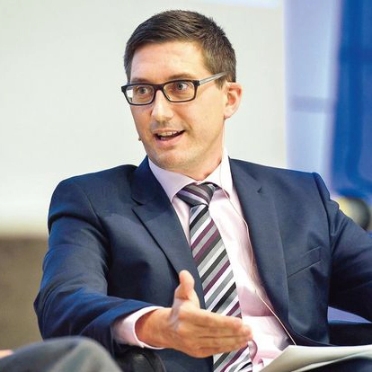


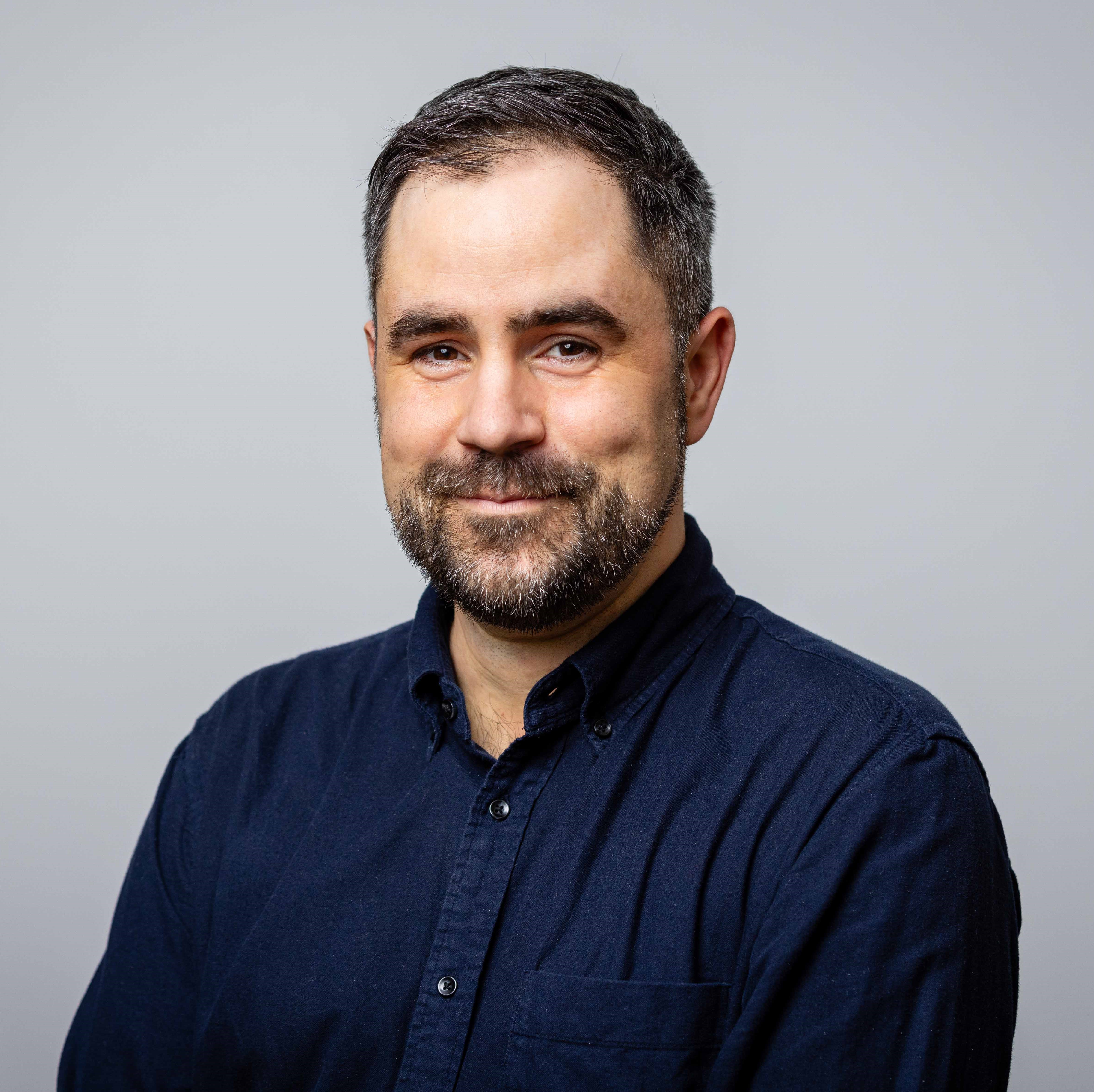
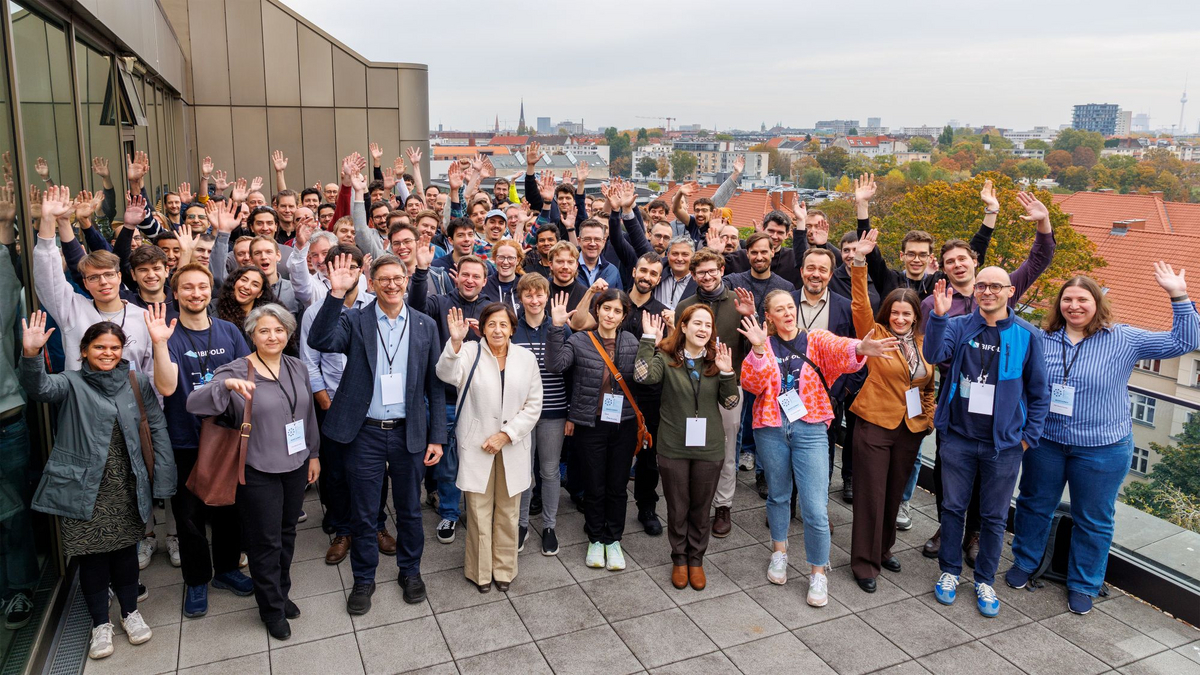
120 guests from research and industry discussed how data is stored, analyzed, and protected in the age of AI.
On October 21, 2026, BIFOLD hosted the BEADS Summit in Berlin, welcoming 120 on-site guests. Databricks, Snowflake, and BIFOLD jointly organized the summit, which brought together leading researchers and practitioners from the international data management community to discuss current challenges and emerging directions in the field.
Data management is the often-invisible infrastructure behind everything from banking apps to artificial intelligence. The summit deliberately sat at the interface between basic research and real-world application, so many talks presented ideas from universities alongside systems already in use at companies.
The future of data analysis
Several talks focused on making data analysis faster and more efficient. Torben Bach Pedersen (Aalborg University) presented ModelarDB, a system that compresses enormous streams of time series data, such as sensor measurements from wind turbines, by describing them with mathematical models instead of storing every single value. Peter Boncz (CWI / Vrije Universiteit Amsterdam) introduced DuckDB, a compact database that analyzes large datasets directly on a laptop, and DuckLake, which extends this approach to data lakes, the large shared repositories where organizations keep raw data. Johannes Gehrke (Uber) looked at how specialized hardware such as graphics processors (GPUs) can speed up analysis. Dan Olteanu (University of Zurich / RelationalAI) showed how cardinality estimation, a database’s prediction of how many results each step of a query will produce, can be made reliable with mathematical guarantees. Thomas Neumann (TU Munich) spoke on “The Many Faces of LIKE,” (LIKE is the SQL operator for searching text by patterns) and Elisa Bertino (Purdue University) asked why data breaches remain a persistent problem despite decades of security research.
The impact of AI on data systems
A second major theme was the impact of AI on data systems. Ismail Oukid (Snowflake) discussed analytics in the “agentic era,” in which AI agents, software that independently plans and carries out tasks, query and analyze data on their own. Danica Porobic (Oracle) showed how databases can provide AI models with the context they need to understand what data actually means. In their talks “The Third Golden Age of Data Engineering” and “The End of System Engineering As We Know It,” Ippokratis Pandis (Databricks) and Tim Kraska (MIT) argued that AI is fundamentally changing how data systems are designed and built, while correctness, efficiency, and security remain as important as ever.
BIFOLD co-director Volker Markl opened and closed the summit. The BIFOLD organizing committee included Ziawasch Abedjan, Matthias Böhm, Volker Markl, and Sebastian Schelter. BIFOLD thanks all speakers, co-organizers, and guests.
About BEADS
BEADS, the Berlin Ecosystem for Analytics and Data Systems, is a community connecting data management research and practice. It links the research expertise of BIFOLD and its partners at TU Berlin, HU Berlin, and HPI Potsdam with Berlin’s industrial ecosystem in data engineering and analytics, where many companies were founded or are led by alumni of Berlin’s research groups. New challenges driven by AI, such as LLM-integrated data pipelines, agent-driven data processing, and real-time inference at scale, call for close collaboration between those who research the foundations and those who build and operate production systems.
Stay tuned for upcoming BEADS events and join the mailing list or follow us on Meetup.
Below is a selection of photos from the BEADS Summit 2026.
Photos: BIFOLD / Michael Setzpfand