




Bringing light to the brain’s data cosmos
Human neuroscience is moving out of the lab and into the everyday world, and measuring brain activity in natural, real-world settings is hard. Imagine a stroke patient who wears a soft cap with small sensors during a physiotherapy session. The patient is asked to move their hand and perform simple thinking tasks. The sensors measure how different areas of the brain respond during these activities. Cedalion helps clinicians analyze the data to monitor recovery and support treatment decisions.
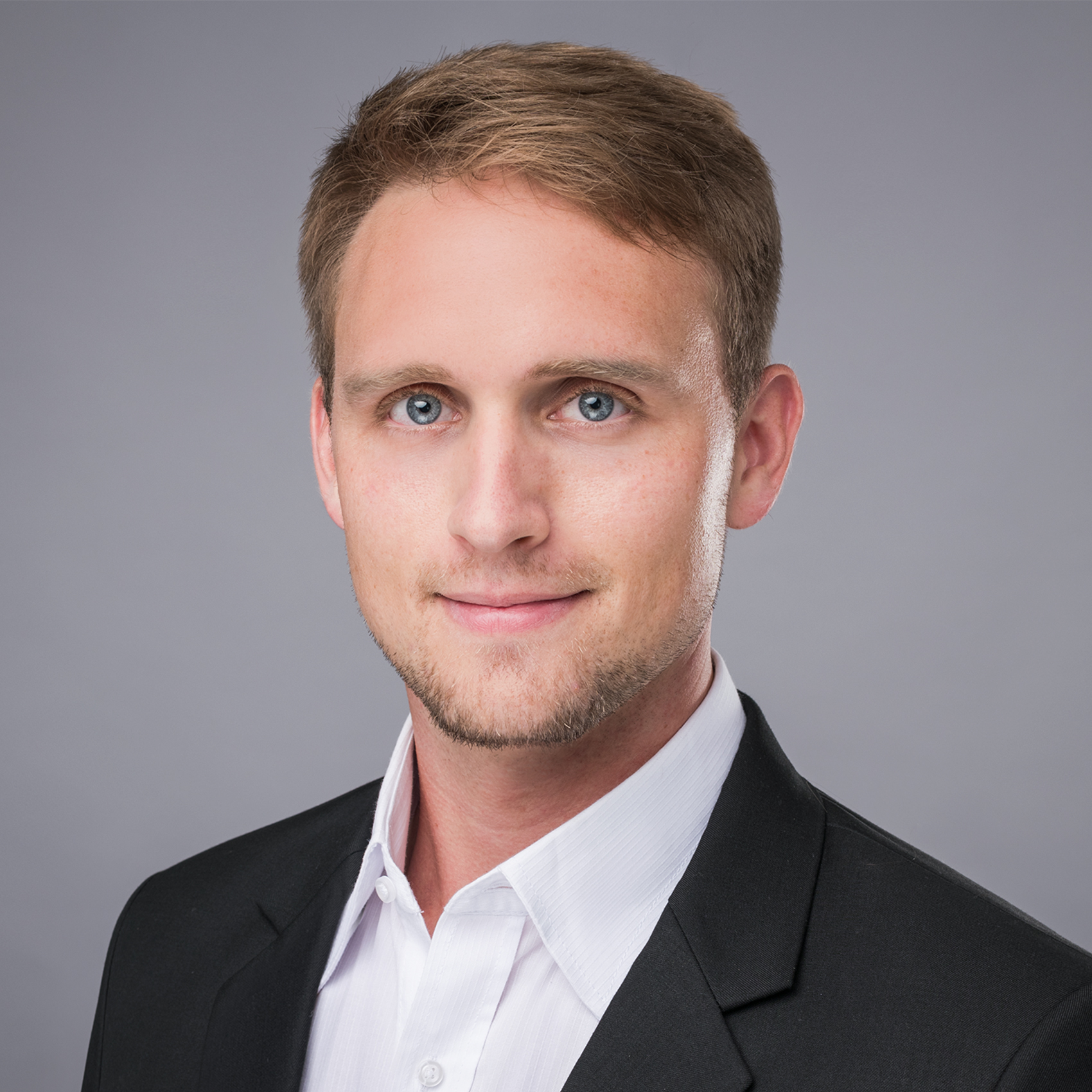
Functional near-infrared spectroscopy (fNIRS) makes it possible to record cortical activity with wearable, light-based sensors, but the signals are easily buried in noise and, until recently, the analysis tools were scattered across platforms and largely cut off from modern machine learning. Cedalion sets out to change that: an open-source Python framework that brings both standard and cutting-edge fNIRS analysis into one reproducible environment and connects it directly to the data-science ecosystem. We interviewed Alexander von Lühmann, research group leader at the IBS Lab at BIFOLD / TU Berlin, whose team developed this open-source fNIRS Toolbox.
Interview with Alexander von Lühmann
What’s behind Cedalion?
The name comes from Greek mythology. Cedalion was the servant who stood on the shoulders of the blind giant Orion and became his eyes, guiding him toward the light of the rising sun. Our toolbox works in much the same spirit: it stands on the shoulders of the tools that came before it — above all the MATLAB packages Homer2/3 and AtlasViewer from our friends at Boston University’s Neurophotonics Center — and it aims to help the field see further. We rebuilt and greatly extended that heritage as an open-source Python framework, so that everything from established, model-based fNIRS analysis to the newest data-driven and machine-learning methods lives in one place. And because it’s built in Python, Cedalion plugs straight into the wider data-science world and integrates with other leading brain-imaging tools like MNE-Python.
So is this a tool just for physicians?
Not at all. We address a broad audience: neuroscientists, engineers developing measurement technology, data scientists, and anyone curious about how cortical activity can be made visible with fNIRS. To give three concrete examples of what you can do with Cedalion right away: first, signal preprocessing and artifact removal — taking recordings all the way from conventional, controlled neuroscience experiments to messy, naturalistic ones and cleaning them up. Second, diffuse optical tomography, which images the brain with light with better contrast and depth resolution rather than just mapping the surface. And third, single-trial analysis with machine learning for brain decoding — whether in brain–computer interfacing, neurology or psychology — to get a sense of what is happening in an individual brain and how it differs between conditions. Our Berlin workshop, by the way, is open to anyone with basic Python knowledge — no prior fNIRS experience required.
Where else can people learn about and try out Cedalion?
In 2026, there are four events. One just took place on July 13 in Boston, as part of the NeuroErgonomics Conference at Boston University. From August 24 to 25, we offer an in-depth 1,5 day hands-on workshop at our BIFOLD premises — free of charge for anyone joining online, though a few in-person spots are still available. On September 4, there’s a seminar talk at PTB in Berlin, and on October 15–16 you can meet Cedalion in Macau at the SfNIRS Biennial Meeting. More information is available at cedalion.tools.
Cedalion today comprises about ten modules. What can we expect in the near future?
We keep growing as a community project, and the next steps build directly on that foundation. A major focus is higher-level, powerful pipelines that can analyze whole groups and larger datasets, rather than one recording at a time, and that enable more complex analysis for people with less in-depth knowledge of coding, data-science or fNIRS in general. We’re also integrating deep-learning models more deeply and developing novel methods for multimodal sensor fusion — combining fNIRS and DOT with modalities like EEG and MEG, where our ongoing close integration with MNE-Python is a real strength. The code stays open, and every contribution is welcome — our hope is that Cedalion becomes a shared lever for bringing wearable fNIRS/DOT and machine learning together, toward neuroscience and neurotechnology in the everyday world with a real chance for translation and impact!
Cedalion Workshop Berlin
Date: August 24 & 25, 2026
Website: bifold.berlin/news-events/events/cedalion-workshop
Registration: (still online spots available, in person seats are fully booked): events.tu-berlin.de
About Alexander von Lühmann
Alexander von Lühmann leads the “Intelligent Biomedical Sensing” research group at BIFOLD, TU Berlin, and is a visiting researcher at the BU Neurophotonics Center (BU NPC). Previously, he served as CSO and R&D director of NIRx Medical Technologies. He is on the board of directors of the Society for functional Near-Infrared Spectroscopy (SfNIRS), co-chairs its standardization committee, and is a member of the ISO/DIN working group for the international fNIRS standard. His research focuses on multimodal fNIRS and diffuse optical tomography and their machine-learning-based analysis, with the goal of advancing wearable, data-driven imaging for everyday neuroscience. He was previously a postdoc at BU NPC, a visiting researcher at the Martinos Center (Harvard), and CTO of Crely LLC. He completed his doctorate (Dr.-Ing., with distinction) in 2018 at TU Berlin and holds an M.Sc./B.Sc. in electrical engineering from KIT. In 2024, he received an ERC Starting Grant (€1.65 million) to study brain activity in everyday life.