



Lunch Talk: Machine Learning in Environmental Seismology: Linking Signals to Processes

October
28,
2026  12:00
- 13:00
12:00
- 13:00


Machine Learning in Environmental Seismology: Linking Signals to Processes

Join us for the next Lunch Talk on October 28. Josefine Umlauft will talk about her work on "Machine Learning in Environmental Seismology: Linking Signals to Processes". Environmental seismology offers rich but challenging data for time-series machine learning, with weak, overlapping, autocorrelated signals that often need to be combined with other environmental sensors. Using seismic forest monitoring as a case study, the talk explores data harmonization, temporal dependence, information leakage, and transferability, and discusses what's needed for more reproducible analyses.
Abstact:
Environmental seismology is an emerging application field for time-series machine learning. Continuous seismic recordings provide a rich archive of natural processes and their evolution across spatial and temporal scales, often capturing unique signals that are difficult to observe directly. At the same time, extracting meaningful information from this archive poses substantial challenges: signals may be weak and non-stationary, multiple sources are often superimposed, observations are strongly autocorrelated, and labeled data are limited. Targeted analyses also increasingly harmonize heterogeneous observations from seismic, meteorological, and various other environmental sensors, which differ in sampling rate, continuity, spatial support, and measurement characteristics. Integrating these data into a common analytical framework is therefore not simply a preprocessing step, but a central part of the modelling task.
These challenges are explored in the context of seismic forest monitoring. Wind-induced tree motion generates ground vibrations that reflect both atmospheric forcing and the biomechanical response of vegetation. Combining seismic records with meteorological observations and physiological measurements provides a basis for examining how tree and forest dynamics are represented across different data streams. It also allows us to test whether seismic observations contain information about physiological tree states beyond what can be inferred from meteorology alone.
Using this application as a case study, the talk addresses practical questions in environmental time-series machine learning: the harmonization and representation of heterogeneous sensor data, the treatment of temporal dependence during model training and evaluation, the prevention of information leakage, and the transfer of learned relationships across sensors and environmental conditions. Approaches ranging from signal-derived features and dimensionality reduction to predictive modelling are presented, alongside a discussion of what is needed to make such analyses more reproducible and transferable, including curated datasets, meaningful benchmarks, and models designed for heterogeneous environmental time series.
Notice Lunch Talk Series: The BIFOLD Lunch Talk series gives BIFOLD members and external partners the opportunity to engage in dialogue about their research in Machine Learning and Big Data. Each Lunch Talk offers BIFOLD members, fellows and colleagues from other research institutes the chance to present their research and to network with each other.
The Lunch Talk takes place at BIFOLD and online. For further information on the Lunch Talks and registration, contact Dr. Laura Wollenweber via email.
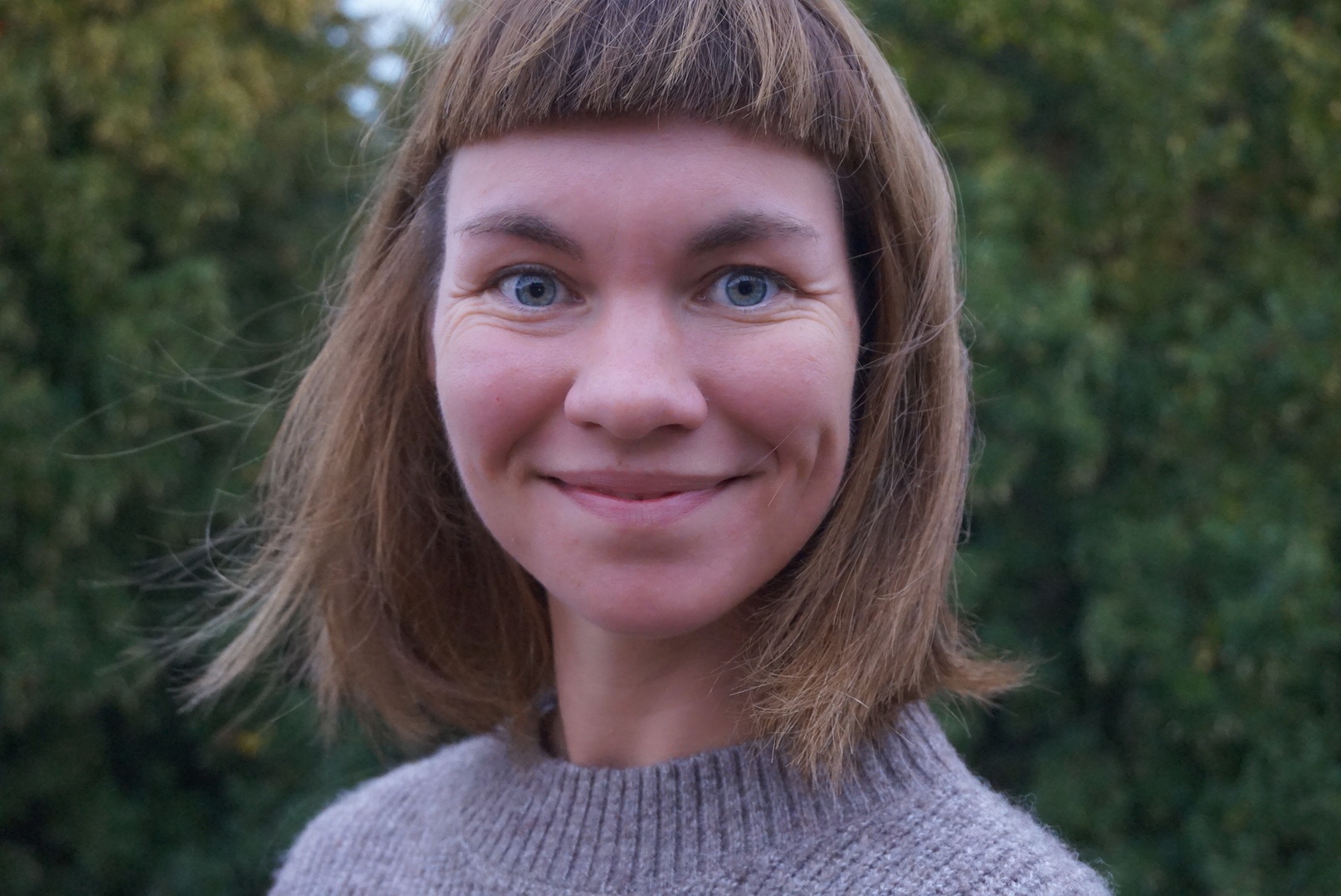
BIO:
Josefine Umlauft holds a Ph.D. in geophysics and leads the Earth and Environmental Sciences research group at ScaDS.AI. Her scientific background lies in geophysics and wave physics, with a focus on the analysis of ambient seismic noise, finite-difference modeling, and time-series analysis.
Building on this foundation, she has participated in and led several extensive field campaigns in environmental seismology, with the goal of investigating processes at the Earth’s surface and in the near-surface subsurface using seismic measurements. Today, she designs and coordinates research at the intersection of Earth system sciences and machine learning. Her work focuses on the integration of heterogeneous environmental data and the development of scalable, data-driven methods for environmental monitoring and analysis.