



Dr. Gabriel Dernbach

Dr. Gabriel Dernbach
Doctoral Researcher
Affiliation: BIFOLD associated
Research project: “Linking Tissue Morphologies to Driver Mutations in Non-small-cell Lung Cancer”
Alexander Möllers, Marvin Sextro, Julius Hense, Gabriel Dernbach, Klaus-Robert Müller
In-Context Multiple Instance Learning
Marvin Sextro, Weronika Kłos, Gabriel Dernbach
MapPFN: Learning Causal Perturbation Maps in Context
Maximilian Alber, Timo Milbich, Alexandra Carpen-Amarie, Stephan Tietz, Jonas Dippel, Lukas Muttenthaler, Beatriz Perez Cancer, Alessandro Benetti, Panos Korfiatis, Elias Eulig, Jérôme Lüscher, Jiasen Wu, Sayed Abid Hashimi, Gabriel Dernbach, Simon Schallenberg, Neelay Shah, Moritz Krügener, Aniruddh Jammoria, Jake Matras, Patrick Duffy, Matt Redlon, Philipp Jurmeister, David Horst, Lukas Ruff, Klaus-Robert Müller, Frederick Klauschen, Andrew Norgan
Atlas 2 - Foundation models for clinical deployment
Nadia Jurczok, Gabriel Dernbach, Benedikt Ebner, Henning Plage, Mihnea P. Dragomir, Philipp Keyl, Julika Ribbat-Idel, Evelyn Ramberger, Florian Roßner, Alexander Quaas, Guido Sauter, Thorsten Schlomm, Frederick Klauschen, Christian Stief, David Horst, Gerald Bastian Schulz, Marie-Lisa Eich, Simon Schallenberg
Multiregional Immune Profiling Reveals Prognostic Patterns in Bladder Cancer
Tancredi Massimo Pentimalli, Simon Schallenberg, Daniel León-Periñán, Ivano Legnini, Ilan Theurillat, Gwendolin Thomas, Anastasiya Boltengagen, Sonja Fritzsche, Jose Nimo, Lukas Ruff, Gabriel Dernbach, Philipp Jurmeister, Sarah Murphy, Mark T. Gregory, Yan Liang, Michelangelo Cordenonsi, Stefano Piccolo, Fabian Coscia, Andrew Woehler, Nikos Karaiskos, Frederick Klauschen, Nikolaus Rajewsky
Combining spatial transcriptomics and ECM imaging in 3D for mapping cellular interactions in the tumor microenvironment
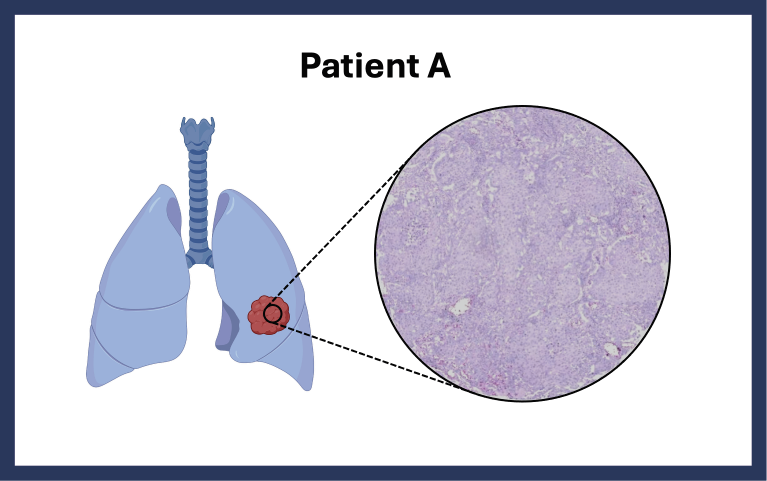
AI Improves Lung Cancer Diagnostics
An interdisciplinary research team from BIFOLD (Berlin Institute for the Foundations of Learning and Data), Technische Universität Berlin, Universitätsklinikum Köln, Charité - Universitätsmedizin Berlin, the AI company Aignostics, and Ludwig Maximilians University Munich (LMU) has developed a novel AI-based method to more accurately predict the survival of lung cancer patients.