


Dr. Tomás Codina

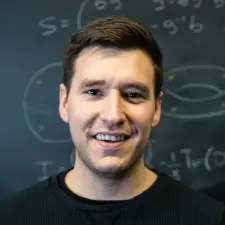
Dr. Tomás Codina
Postdoctoral Researcher
Affiliation: BIFOLD
Tomas Codina is a Postdoctoral Researcher at the Intelligent Biomedical Sensing Lab at Technische Universität Berlin, where he works on multimodal neuroimaging with a focus on fNIRS–EEG fusion in naturalistic environments. His research centers on machine- and deep-learning approaches for multimodal neuroimaging, with a particular focus on developing unsupervised, data-driven methods that integrate fNIRS/DOT, EEG, and physiological or environmental signals. He is also actively involved in the data acquisition and analysis components of multimodal fNIRS–EEG pipelines. His interests include enabling continuous brain imaging in real-world conditions and exploring how these multimodal frameworks can be translated toward clinical applications.
He completed his PhD in theoretical high-energy physics at Humboldt University of Berlin under the supervision of Prof. Dr. Olaf Hohm, graduating *summa cum laude*. From 2020 to 2023, his doctoral research focused on higher-derivative corrections in string theory, particularly for cosmological and black-hole backgrounds. He previously earned his *Licenciatura* in Physics—equivalent to a combined bachelor’s and master’s degree—at the University of Buenos Aires in Argentina.
- Neurotechnology
- Neuroimaging
- Multimodal fusion
- fNIRS
- EEG
Eike Middell, Laura B. Carlton, Shakiba Moradi, Tomás Codina, Thomas Fischer, Josef Cutler, Shannon M. Kelley, Jacqueline Behrendt, Theekshana Dissanayake, Nils Harmening, Meryem A. Yücel, David A. Boas, Alexander von Lühmann
Cedalion tutorial: a Python-based framework for comprehensive analysis of multimodal fNIRS and DOT from the lab to the everyday world
E. Middell, L. Carlton, S. Moradi, T. Codina, T. Fischer, J. Cutler, S. Kelley, J. Behrendt, T. Dissanayake, N. Harmening, M. A. Yücel, D. A. Boas, A. von Lühmann
Cedalion Tutorial: A Python-based framework for comprehensive analysis of multimodal fNIRS & DOT from the lab to the everyday world
Tomás Codina, Benjamin Blankertz, Alexander von Lühmann
Multimodal fNIRS-EEG Sensor Fusion: Review of Data-Driven Methods and Perspective for Naturalistic Brain Imaging
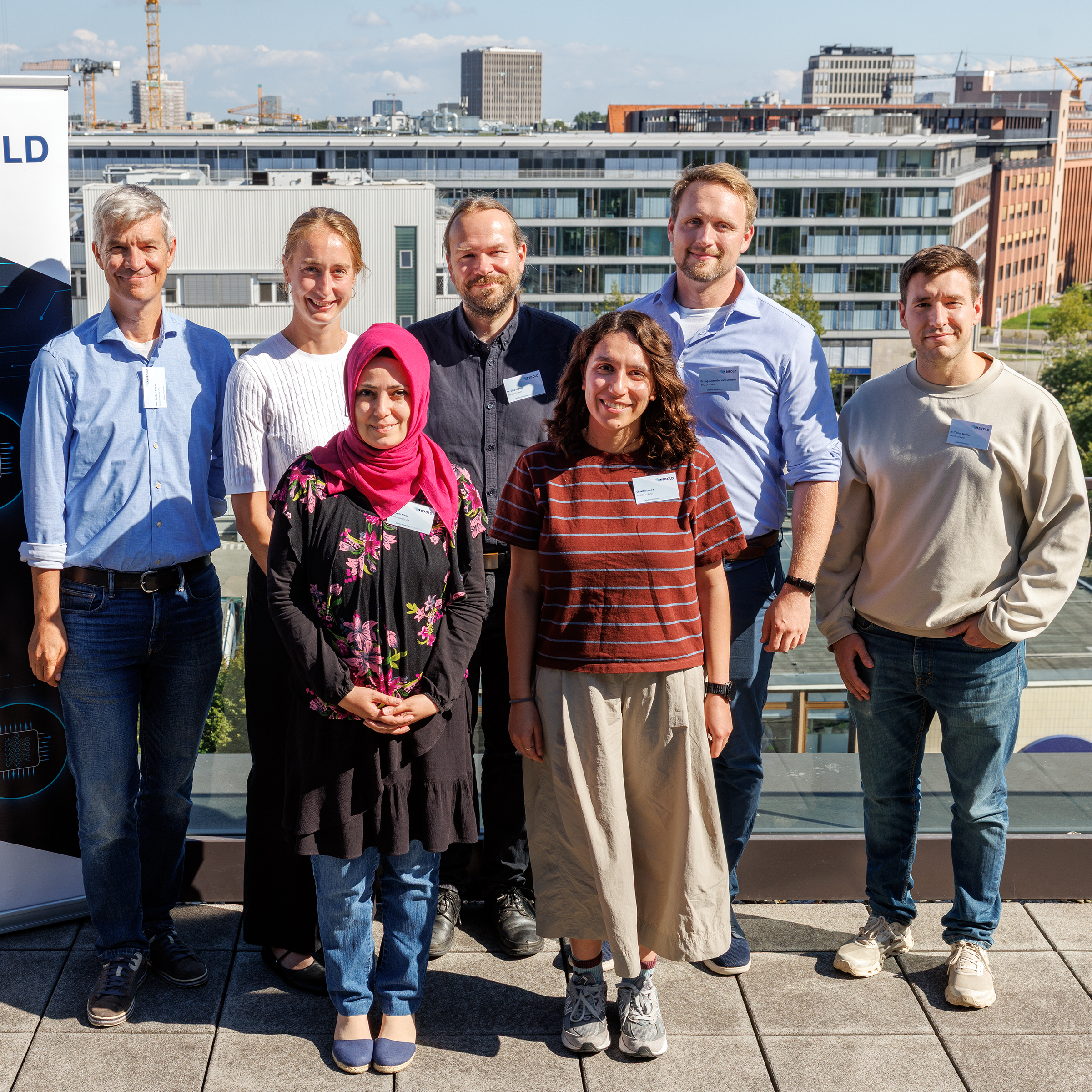
Photo Recap: Cedalion Workshop at BIFOLD
In the context of the MoBI conference, about 140 researchers, engineers, and physicians joined BIFOLD on-site and online for a 1.5-day workshop on Cedalion, the new Python-based toolbox for multimodal fNIRS and DOT analysis.
IBS Lab Contribution to fNIRS UK 2025
At fNIRS UK 2025 in Cambridge, IBS Lab will showcase ERC-funded research on multimodal neuroimaging, including a Cedalion toolbox workshop, advances in fNIRS-EEG fusion, and deep learning transfer from fMRI to fNIRS/DOT.