

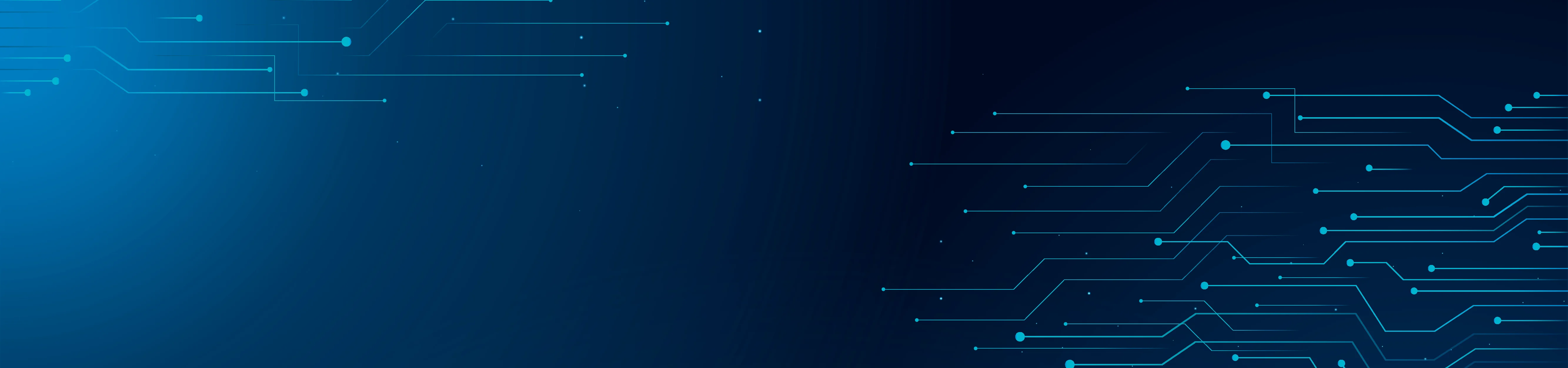

Dr. Eike Middell

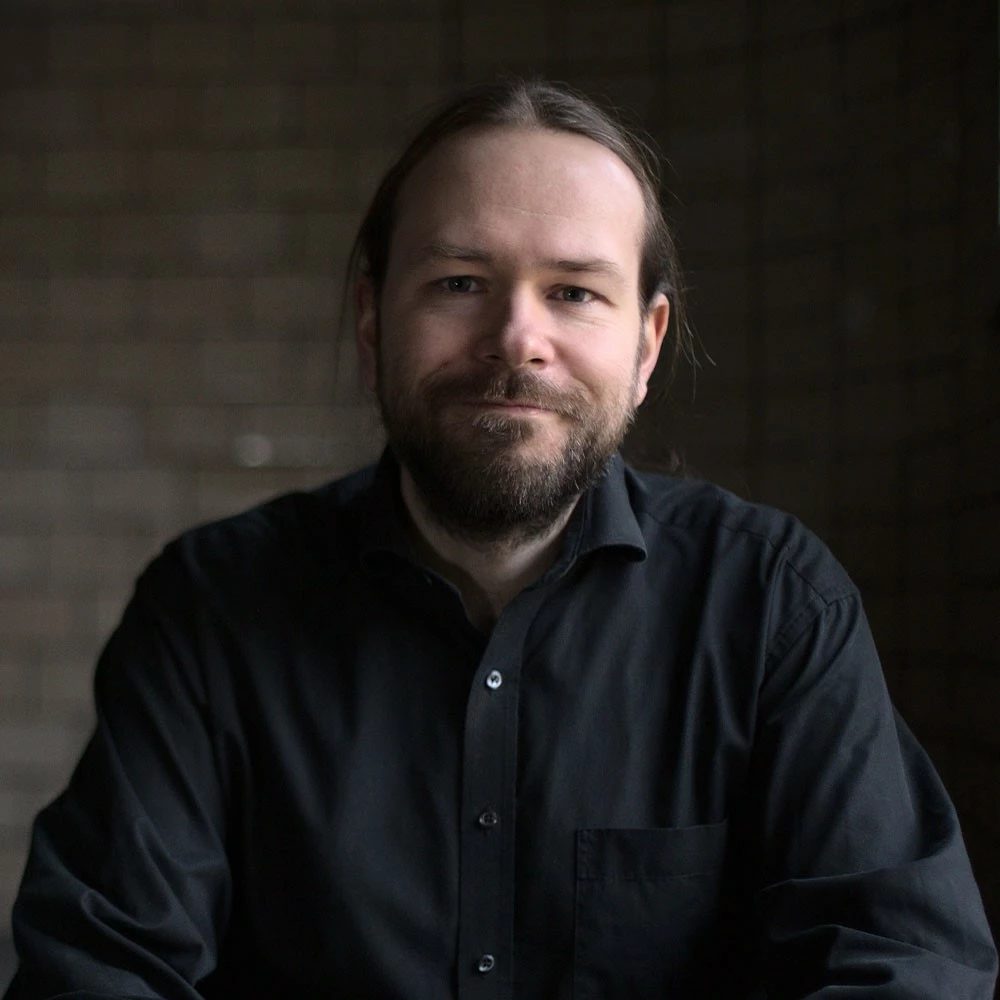
Dr. Eike Middell
Postdoctoral Researcher
Eike Middell graduated in astroparticle physics while working on neutrino telescopes in Siberia and Antarctica. These experiments instrumented large bodies of water and glacial ice with optical sensors to detect the faint light created by cosmic-ray particles interacting with matter. Subsequently, he transitioned to the field of neuroimaging with a focus on improving the digital signal processing of functional near-infrared spectroscopy (fNIRS) imagers, specifically in the context of assessing side-effects and potential improvements of deep brain stimulation for Parkinson's disease. Eventually, his role in a small team involved overseeing the software development of a portable near-infrared spectrometer from conception to market release. Further on, as a freelancing scientific software developer he contributed to diverse projects, such as forecasting financial time series and improving the safety of industrial plants by using spectroscopic measurements from remote sensors to infer the distribution of leaked gas clouds.
- Functional near-infrared spectroscopy (fNIRS) measurement and analysis techniques
- Inverse problems, particularly fNIRS image reconstruction
- Machine learning methods for multimodal sensor data to improve the utilization of physiological information during data analysis
Eike Middell, Laura B. Carlton, Shakiba Moradi, Tomás Codina, Thomas Fischer, Josef Cutler, Shannon M. Kelley, Jacqueline Behrendt, Theekshana Dissanayake, Nils Harmening, Meryem A. Yücel, David A. Boas, Alexander von Lühmann
Cedalion tutorial: a Python-based framework for comprehensive analysis of multimodal fNIRS and DOT from the lab to the everyday world
Thomas Fischer, Eike Middell, Shakiba Moradi and Alexander von Lühmann
fNIRS Single-trial decoding improves systematically with higher optode density, model-based noise regression, and image reconstruction
Thomas Fischer, Eike Middell, Shakiba Moradi, Alexander von Lühmann
fNIRSSingle-TrialDecodingImprovesSystematicallyWith 3 HigherOptodeDensity,Model-BasedNoiseRegression,and 4 ImageReconstruction
Laura B. Carlton, Miray Altınkaynak, Shannon Kelley, Bernhard B. Zimmermann, Sreekanth Kura, Eike Middell, Alexander von Lühmann, Emily P. Stephen, Meryem A. Yücel, David A. Boas
Surface-based image reconstruction optimization for high-density functional near-infrared spectroscopy
E. Middell, L. Carlton, S. Moradi, T. Codina, T. Fischer, J. Cutler, S. Kelley, J. Behrendt, T. Dissanayake, N. Harmening, M. A. Yücel, D. A. Boas, A. von Lühmann
Cedalion Tutorial: A Python-based framework for comprehensive analysis of multimodal fNIRS & DOT from the lab to the everyday world
BIFOLD Contributes to COMBINE 2026
The COMBINE 2026 Workshop is a two-day event in Berlin where neuroimaging experts meet to discuss functional near-infrared spectroscopy (fNIRS) and magnetoencephalography (MEG) with optically pumped magnetometers (OPMs). The IBS Lab at BIFOLD contributes two talks to the event.
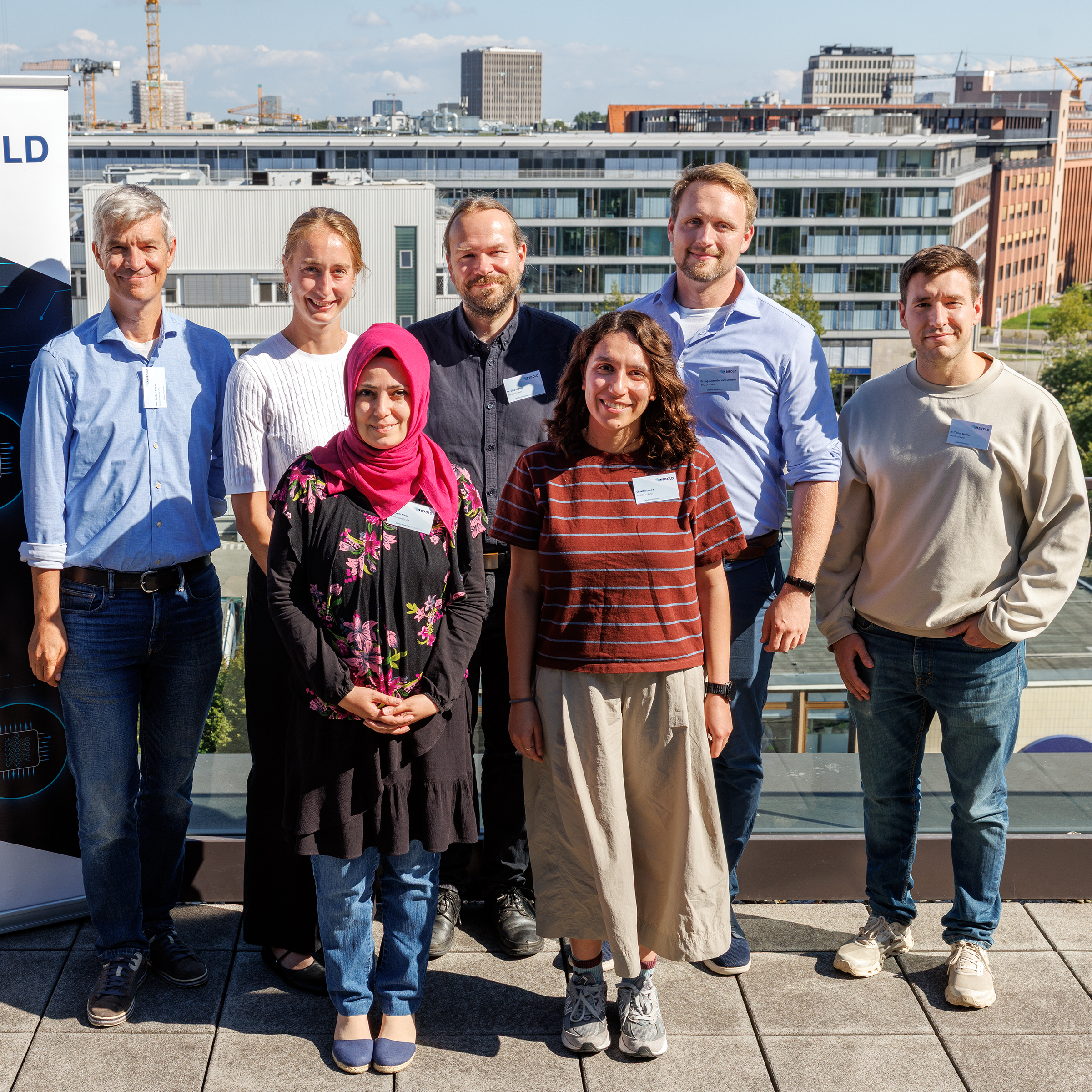
Photo Recap: Cedalion Workshop at BIFOLD
In the context of the MoBI conference, about 140 researchers, engineers, and physicians joined BIFOLD on-site and online for a 1.5-day workshop on Cedalion, the new Python-based toolbox for multimodal fNIRS and DOT analysis.
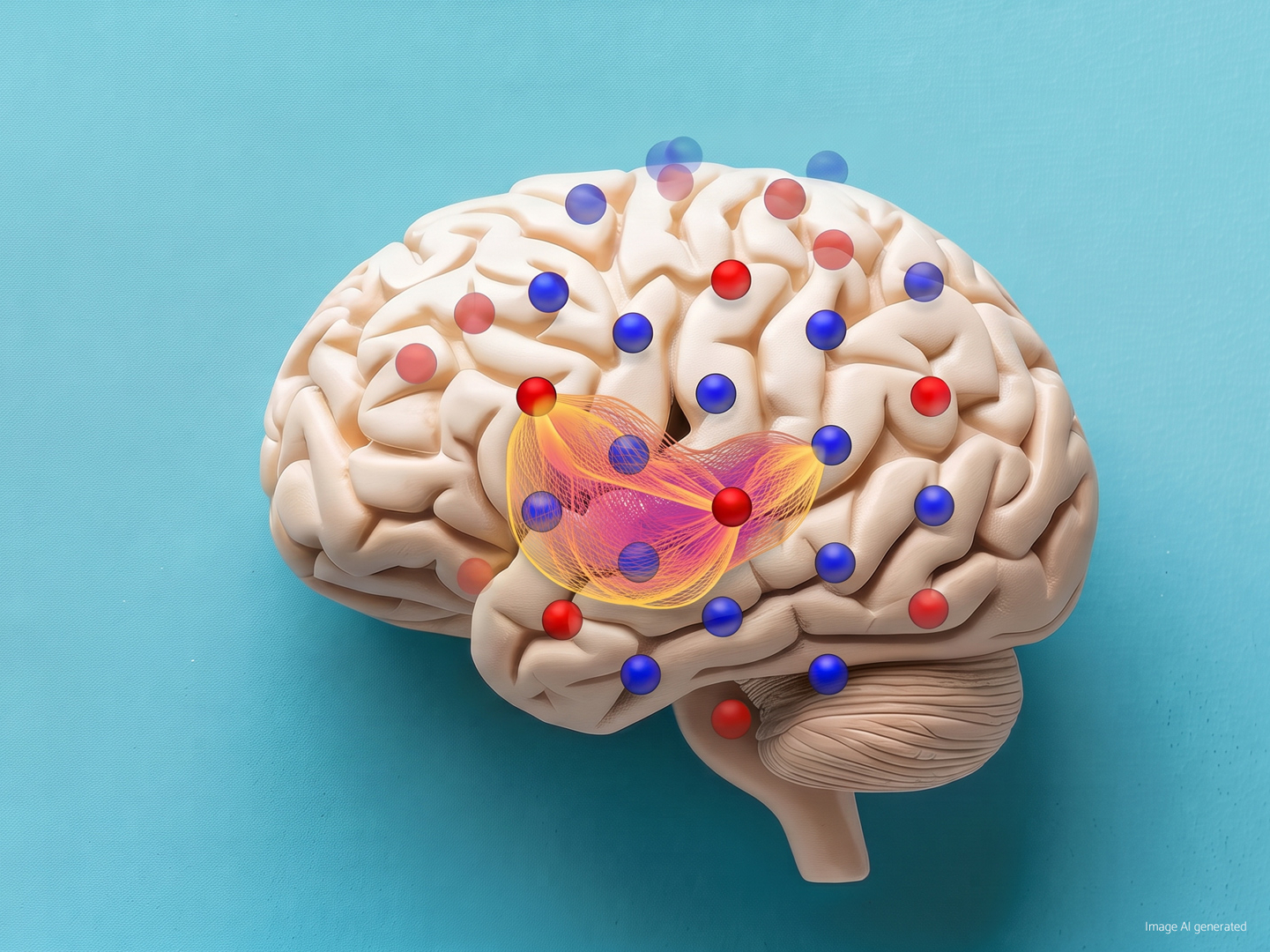
Paper Highlight: Cedalion Tutorial
Researchers from BIFOLD / TU Berlin and Boston University have published a comprehensive tutorial on Cedalion, an open-source project that brings together analysis tools for multimodal neuroimaging, with a special focus on fNIRS and DOT data. The paper appeared on 13 August 2026 in the journal Neurophotonics. A hands-on community workshop follows on 24–25 August in Berlin and online.
IBS Lab Contribution to fNIRS UK 2025
At fNIRS UK 2025 in Cambridge, IBS Lab will showcase ERC-funded research on multimodal neuroimaging, including a Cedalion toolbox workshop, advances in fNIRS-EEG fusion, and deep learning transfer from fMRI to fNIRS/DOT.