



News
SEARCH
ALL NEWS

Researcher Spotlight: Dr. Alexander Warnecke
Congratulations to Dr. Alexander Warnecke who succesfully defended his PhD "Security Viewpoints on Explainable Machine Learning" on April 16, 2024.
BIFOLD researchers present three papers at ICLR 2024
The International Conference on Learning Representations (ICLR) is a Core-A gathering of experts who are dedicated to advancing a branch of artificial intelligence known as representation learning, which is also called deep learning.
BIFOLD papers accepted at the CVPR and ESWC 2024
The BIFOLD research project "Unified Processing Model for Distributed Stream Reasoning" released two preprints on Open Distributed Systems, which will be presented at the CVPR 2024 and ESWC 2024 conferences.

“POLAR” lowers the adoption barrier for adaptive query processing in database systems
A preprint by BIFOLD researchers titled "POLAR: Adaptive and Non-invasive Join Order Selection via Plans of Least Resistance" is set to be presented at the VLDB conference in 2024. The database engineering paper introduces a technique for reordering joins that is adaptive, with a focus on non-invasive integration and low overhead.

Girls' Day: dEIn Labor and BIFOLD offer AI workshop
TU Berlin is once again participating in this year's "Girls' Day" on April 25, 2024. dEIn Labor and BIFOLD offer a workshop for schoolgirls from the age of 15.
EDBT conference 2024
The EDBT conference 2024 took place from March 25 to 28. BIFOLD researchers presented three papers at this Core-A conference on databases: "Benchmarking Stream Join Algorithms on GPUs: A Framework and its Application to the State of the Art", "Bridging the Gap: Complex Event Processing on Stream Processing Engines", and “Evaluation of Sampling Methods for Discovering Facts from Knowledge Graph Embeddings”.

Smart Sky: Transforming Earth Observation through AI
Through three engaging lectures, scientists from NASA, the Planetarium Berlin, and BIFOLD explained the significance of satellite images and modern AI techniques.

Project Launch AIgenCY
With the innovative research project "AIgenCY - Opportunities and Risks of Generative AI in Cybersecurity," leading experts from academia and industry take on the challenge of exploring the implications of generative artificial intelligence (AI) for cybersecurity.

Sustainable Federated Learning
Federated Learning is expected to further increase the power consumption of machine learning, which is already recognized as one of the most energy-intensive computational applications today. However, due to its distributed nature, Federated Learning also offers new opportunities to align this demand with the availability of green energy.
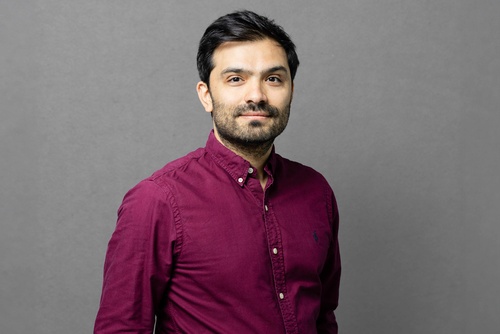
Welcome Prof. Dr. Ziawasch Abedjan
As of March 1, 2024, BIFOLD welcomes a new Research Group Lead in Berlin: Prof. Dr. Ziawasch Abedjan heads the new chair for Data Integration and Data Preparation. In particular, he develops new algorithms for the automatic preparation, extraction, and cleaning of datasets for data science workflows.