



News
SEARCH
ALL NEWS
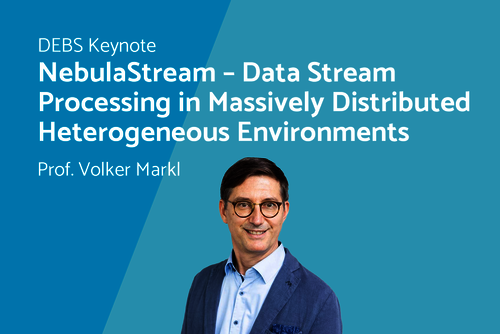
DEBS 2024 - Keynote by Volker Markl
Lyon, France will host the 18th ACM International Conference on Distributed and Event-Based Systems (DEBS) from June 25 to 28, 2024. BIFOLD Director Volker Markl is honored to offer a keynote on data stream processing.
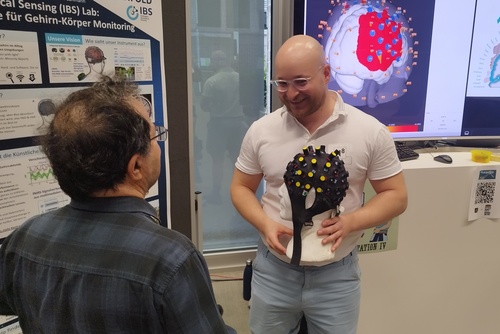
LNDW 2024: BIFOLD KI-scavenger hunt inspires families
During the Long Night of Science, BIFOLD offered a digital scavenger hunt to present complex AI research topics for both young and old.

BIFOLD Researchers receive three SIGMOD Awards
Each year SIGMOD conference awards are bestowed on researchers who have especially contributed to the field of data management. In 2024 BIFOLD researchers were honored to receive three awards.
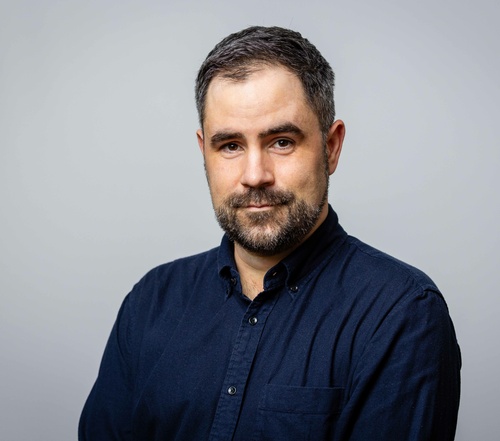
Newly appointed BIFOLD Professor: Sebastian Schelter
As of June 1st, 2024, Sebastian Schelter is a full Professor at the Berlin Institute for the Foundations of Learning and Data (BIFOLD) and Technische Universität Berlin. He chairs the Management of Data Science Processes group (DEEM Lab), whose research is focused on the intersection of data management and machine learning.
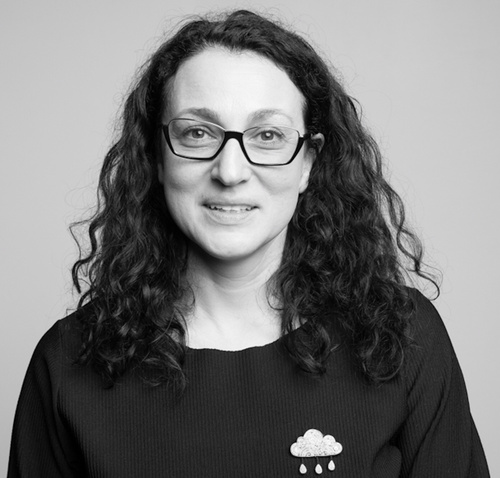
Welcome Julia Stoyanovich
We are happy and honored to welcome Prof. Julia Stoyanovich as a new BIFOLD Fellow.
Julia is an Institute Associate Professor of Computer Science and Engineering at the Tandon School of Engineering, Associate Professor of Data Science at the Center for Data Science, and Director of the Center for Responsible AI at New York University (NYU).

BIFOLD at the 2024 ACM SIGMOD/PODS Conference
BIFOLD researchers presented four research papers, two demos, one workshop paper and were of a panel at the 2024 ACM SIGMOD/ PODS Conference in Santiago, Chile.
Videos of the "ML& DM for Earth Observation" Workshop
The videos from the "Machine Learning and Data Management for Earth Observation" workshop are now accessible online. During the workshop leading experts discussed cutting-edge advancements in satellite technology, machine learning, and data management. Explore or review 12 compelling sessions.
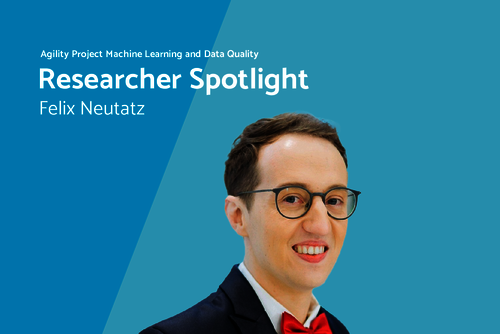
Researcher Spotlight: Felix Neutatz
"Machine Learning and Data Quality" is the first concluded BIFOLD Agility Project. Get to know BIFOLD researcher Felix Neutatz and gain valuable insights into the project, his work and the Agility Program.

“KI ist was es isst”: Prof. Dr. Ziawasch Abedjan on Data Quality at TU Berlin
At the “Tag der Lehre” (Teaching Day) at the TU Berlin on May 27, 2024, BIFOLD Research Group Lead Prof. Dr. Ziawasch Abedjan welcomed the attendees with a 20-minute talk on the quality of training data.

IEEE Test-of-Time Award for Konrad Rieck
Together with his former PhD student Fabian Yamaguchi and the entire team, Konrad Rieck won the Test-of-Time Award at the IEEE Symposium on Security and Privacy for their paper: "Modeling and Discovering Vulnerabilities with Code Property Graphs ". The IEEE Symposium on Security and Privacy is the oldest and most important conference in computer security. Each year, the "Test-of-Time Award" is given to papers that significantly influenced research and can be described as groundbreaking.