




Welcome to two new BIFOLD Fellows
The Berlin Institute for the Foundations of Learning and Data (BIFOLD) is pleased to welcome two new Fellows: Prof. Dr. Matthias Scheffler and Prof. Dr. Alexandre Tkatchenko. Both are theoretical physicists who combine quantum mechanics with artificial intelligence to understand and predict how materials and molecules behave.
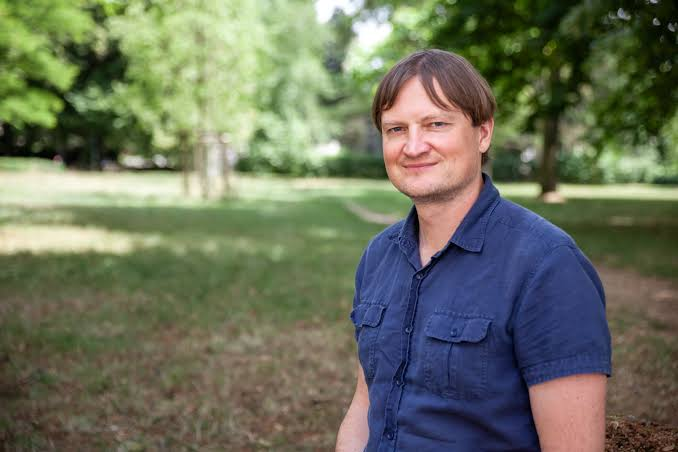
Prof. Dr. Matthias Scheffler
Matthias Scheffler works on condensed-matter theory, materials science, and artificial intelligence. He is known especially for contributions to density-functional theory, many-electron quantum mechanics, multi-scale approaches, and symbolic regression. Since 2003, he and his group have been developing artificial intelligence methods and promoting open science and scientific data sharing. Large amounts of materials data are generated worldwide, but only a fraction is used and published. Together with Claudia Draxl, Scheffler therefore designed a database for computational materials science that stores research data with thorough documentation and makes it usable for others. In 2014, he established the Novel-Materials Discovery Laboratory (NOMAD Laboratory), which he directs. Well-described, accessible data allow artificial intelligence methods to identify materials with novel and advantageous properties, which can significantly shorten the path from basic research to market-ready products. Scheffler is a member of the German National Academy of Sciences Leopoldina.
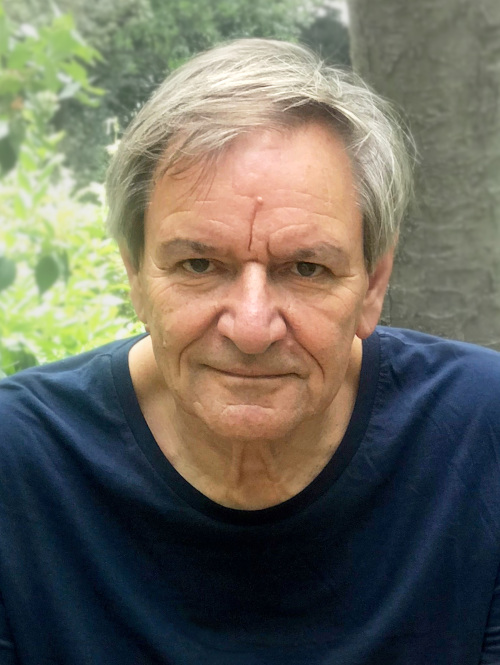
Prof. Dr. Alexandre Tkatchenko
Alexandre Tkatchenko is a professor at the Department of Physics and Materials Science at the University of Luxembourg, where he holds the Chair of Theoretical Chemical Physics, a group of around 30 multidisciplinary scientists.
His group develops accurate and efficient first-principles computational and artificial intelligence models for a wide range of complex materials. The aim is to understand and quantitatively predict their structural, cohesive, electronic, and optical properties at the atomic scale and beyond. His research areas include machine learning applied to molecules and materials, many-body theory such as density-functional theory and quantum chemistry, and non-covalent interactions.
Tkatchenko has close ties to Berlin. From 2008 to 2010, he was an Alexander von Humboldt Fellow at the Fritz Haber Institute of the Max Planck Society, where he then led an independent research group from 2011 to 2016 before joining the University of Luxembourg.
His awards include election as Fellow of the American Physical Society, Fellow of the Royal Society of Chemistry, the Gerhard Ertl Young Investigator Award of the German Physical Society, the Dirac Medal of the World Association of Theoretical and Computational Chemists, the Feynman Prize for Nanotechnology of the Foresight Institute, and the van der Waals Prize of the International Conference on Non-Covalent Interactions. He has received six grants from the European Research Council (ERC): a Starting Grant (2011), a Consolidator Grant (2017), an Advanced Grant (2022), and Proof of Concept Grants in 2020, 2023, and 2026. Tkatchenko is also a co-founder of Quastify GmbH, a start-up that combines quantum and statistical mechanics with machine learning to explore chemical spaces efficiently.