




Nature study shows how the human brain stores content and context separately and combines them together in a targeted manner
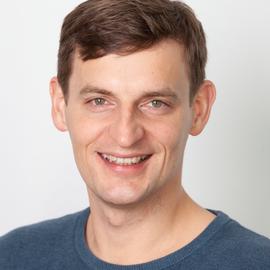
How does the human brain manage to reliably separate memories and still link them together at the right moment? A fundamental answer to this question has now been provided by a new study published in the renowned academic journal Nature. Among those involved in the international research led by the University of Bonn was Johannes Niediek, researcher at the Berlin Institute for the Foundations of Learning and Data (BIFOLD) at TU Berlin.
The study reveals for the first time directly in humans how the brain stores memory content and its context in two largely separate groups of nerve cells. But also how these specialized neurons work closely together and couple dynamically when a memory is formed or correctly recalled. It is this interaction that enables the high flexibility of human episodic memory.
Why we don't confuse experiences
Johannes Niediek explains how this works in everyday life using an example drawn from his own experience: "On Sunday I went to the technology museum with my daughter, and on Monday we sang together in the kitchen. I can clearly remember both events separately – I don't suddenly think that we sang together in the technology museum." At the same time, the individual elements of a memory can be quickly linked together: "When I think of my daughter, I immediately think of both the technology museum and the kitchen, even though I have only experienced both situations once each." It was precisely this ability to clearly separate the content and context of a memory on the one hand, and to reliably combine them on the other, that formed the focus of the study, which has now been published in Nature.
Observing human memory in real time
This mechanism was investigated under the direction of Dr. Marcel Bausch and Professor Florian Mormann from the Department of Epileptology in Bonn using high-resolution recordings of individual nerve cells in patients with drug-resistant epilepsy. As part of their diagnosis, hair-thin electrodes had been implanted in the patients' hippocampus and adjacent brain regions – areas that play a central role in memory. During voluntary experiments, the participants worked on tasks on a laptop requiring them to assess identical images in different contexts.
The analysis of over 3,000 neurons showed two clearly distinguishable groups: Content neurons, which responded to certain images independently of the context, and context neurons, which responded to the respective task independently of the image. Very few nerve cells actually encoded both pieces of information at the same time.
The decisive factor was that memories were formed most reliably when both cell groups worked together in a coordinated manner. In the course of the experiments, the connections between the cell groups became measurably stronger. A single memory element was thus able to reactivate the complete context – a process known as pattern completion.
Contribution from TU Berlin
Johannes Niediek was involved in planning the study, conducting the experiments with epilepsy patients, and discussing and classifying the results while still completing his doctorate at the University of Bonn. He continued this work after joining Professor Dr. Klaus-Robert Müller's Machine Learning Group at TU Berlin and BIFOLD. Niediek's interdisciplinary background at the interface of neuroscience and data-driven analysis contributed to the precise evaluation and comprehensible description of the complex neuronal relationships.
Prospects for research and medicine
The results provide a key explanation for the flexibility of human memory by showing that the brain can use the same content in ever-changing contexts, without having to store every possible combination separately. Future studies will seek to clarify whether everyday background contexts, such as places or moods, are processed according to the same principles, and how disruptions to this neural interaction influence memory.
The study "Distinct Neuronal Populations in the Human Brain Combine Content and Context" is available online in Nature.
DOI: 10.1038/s41586-025-09910-2
Further information is available from:
Dr. Johannes Niediek
Machine Learning Group
BIFOLD
Faculty IV – Electrical Engineering and Computer Science
Email: johannes.niediek@tu-berlin.de
Author: Barbara Halstenberg
Source: TU Berlin