



11/2026 BIFOLD Colloquium

September
25,
2026  11:00
- 12:00
11:00
- 12:00


On the Different Flavors of Tabular Reasoning

Abstract:
The value of tabular data is clear: it fuels our understanding of, and decision-making in, many organizational processes. In this talk, Madelon Hulsebos will first address the need to assess the sensitivity of a (tabular) dataset, to avoid that it ends up in the wrong "hands". She'll revisit the notion of sensitive data, and argue that the sensitivity of data is defined by its context, and goes beyond personal identifiable information (PII). Building on this contextual notion, she will present a framework for assessing data sensitivity of any kind, which they developed in collaboration with the United Nations OCHA Humanitarian Data Centre. In the second part of the talk, Madelon will move from semantic to analytical reasoning over tabular data and introduce the SQaLe dataset, the first large-scale text-to-SQL dataset that is grounded in thousands of real-world database schemas. She will present its multi-purpose properties, and how it instruments our vision for small specialized text-to-SQL models as well as specialized models for multi-table retrieval in open-domain tabular insight extraction. The talk closes with a preview of their latest work around foundation models and agents for predictive reasoning over tabular data, and a reflection on the different characteristics and challenges that surface across these different flavors of tabular reasoning.
Short-Bio:
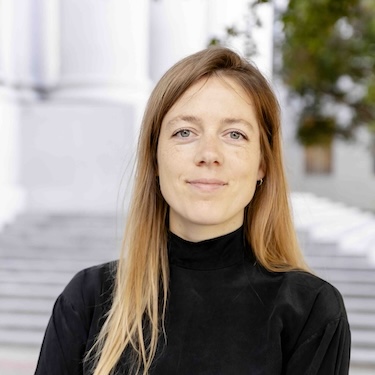
Madelon Hulsebos is a senior researcher (tenured) at CWI in Amsterdam where she leads the Table Representation Learning Lab, and faculty and MT member at ELLIS Amsterdam. Prior to that, she was a postdoctoral fellow at UC Berkeley, and obtained her PhD from the University of Amsterdam for which she did research at MIT and Sigma Computing. Her general research interest is on AI for tabular data to democratize insights from structured data. Madelon founded the Tabular Representation Learning workshop series at NeurIPS and ACL, and leads various other efforts in this space. She was awarded a BIDS-Accenture fellowship for her postdoctoral research at UC Berkeley, an NWO AiNed fellowship grant, and several industry grants.