



PhD Shinichi Nakajima


PhD Shinichi Nakajima
Research Junior Group Lead
Affiliation: BIFOLD
Dr. Shinichi Nakajima is a member of Machine Learning Group in Technische Universität Berlin. He received the master degree on physics in 1995 from Kobe university, and worked with Nikon Corporation until September 2014 on statistical analysis, image processing, and machine learning. He received the doctoral degree on computer science in 2006 from Tokyo Institute of Technology. His research interest is in theory and applications of machine learning, in particular, Bayesian inference, generative modeling, uncertainty estimation, explainable artificial intelligence, and their applications for computer vision, natural language processing, science and quantum computing. At the BIFOLD he leads the research group "Probabilistic Modeling and Inference".
- Generative modeling
- Bayesian inference
- Bayesian optimization
- Inverse problems
- Quantum computing
Ankur Singha, Jacob Kauffmann, Karl Jansen, Jacob Finkenrath, Vipul Arora, Shinichi Nakajima
Sector-Resolved Flow Sampling for Topologically Frozen Lattice Gauge Theories
Frederik Stalschus, Samuele Pedrielli, Stefan Kühn, Karl Jansen, Kim A. Nicoli, Shinichi Nakajima
Prior-Informed Adaptive Shifts for Sequential Minimal Optimization in Variational Quantum Eigensolvers
Marco Morik, Xiao Ruiting, Shinichi Nakajima, Stefan Haufe, Ismail Huseynov
Structure-Preserving Correction Learning for Sparse Bayesian Inference in Brain Source Imaging
Dennis Grinwald, Philipp Wiesner, Shinichi Nakajima
Federated Sampling of Molecular Conformers via Compositional Flows
Marco Morik, Erick Costa e Silva Talarico, Matheus Cafaro Arouca Sobreira, Luiz Alberto Barbosa de Lima, Shinichi Nakajima
Uncertainty aware pre-stack seismic inversion using probabilistic neural networks
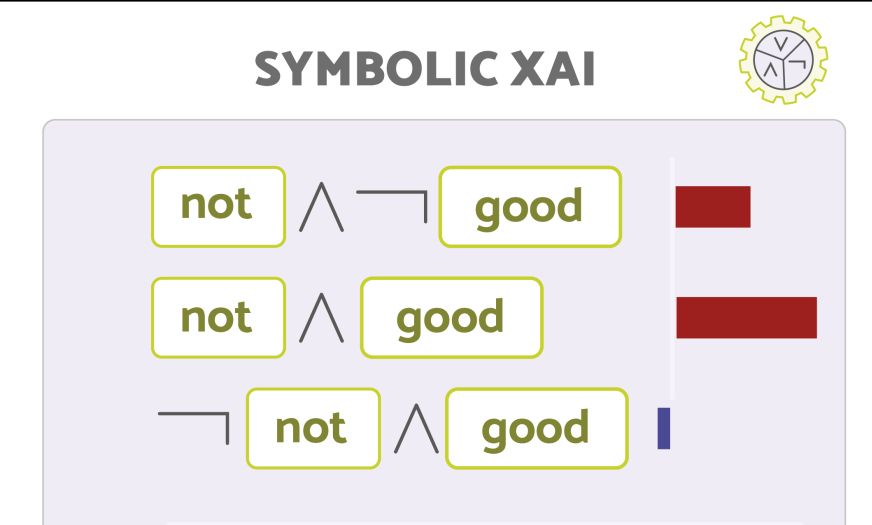
Symbolic XAI
Researchers at BIFOLD have been exploring how to make AI explain itself in the same way, people explain themselves. The team’s work focuses on making AI predictions as clear and intuitive as a human explanation.
ICLR 2025 Conference Contributions
The BIFOLD research groups Machine Learning and Explainable Machine Learning in Medicine will participate in ICLR 2025, contributing eight papers, one blog article, and one talk. The conference is set for April 24-28, 2025, in Singapore.

Tackling Data Heterogeneity in Federated Learning
A persistent challenge in Federated Learning (FL) lies in handling statistical heterogeneity—namely, if the clients’ distributions are different from each other. Shinichi Nakajima, BIFOLD research Grouplead and his team propose FLOCO (Federated Learning over Connected Modes), to tackle those issues.