



Leila Arras


Leila Arras
Doctoral Researcher
Affiliation: Fraunhofer HHI
Leila Arras is currently a doctoral researcher and research associate at the Fraunhofer Heinrich Hertz Institute, where she is part of the Explainable Artificial Intelligence research group within the Department of Artificial Intelligence and a member of the BIFOLD Graduate School. Among her qualifications, she previously earned an M.Sc. in Computer Science with distinction from Technische Universität Berlin, specializing in machine learning and scalable data science. Her research interests include machine learning, neural networks, interpretability, and their applications to natural language processing and computer vision. As a researcher, she is particularly interested in understanding the inner workings of neural networks and developing new methods to make artificial intelligence models more transparent.
Her research has broadened the scope of explainable artificial intelligence (XAI) to novel tasks and model architectures, in particular by extending XAI methods to recurrent neural networks for the processing of textual and sequential data. In addition, she has introduced new quantitative evaluation approaches for the objective assessment and comparison of XAI methods. Through an international collaboration, she advanced causal inference by introducing a neural network based framework for decomposing probabilistic predictions from an assumed causal model to identify combinations of causes increasing the risk of an outcome. More recently, her research has focused on examining and extending decomposition-based attribution methods for Transformer-based large language models.
- Explainable Artificial Intelligence
- Mechanistic Interpretability
- Large Language Models
- Attribution Evaluation
- Neural Networks
- Machine Learning
- Causal Inference
Leila Arras, Bruno Puri, Patrick Kahardipraja, Sebastian Lapuschkin, Wojciech Samek
A Close Look at Decomposition-based XAI-Methods for Transformer Language Models
Wojciech Samek, Leila Arras, Ahmed Osman, Grégoire Montavon, Klaus-Robert Müller
Explaining the Decisions of Convolutional and Recurrent Neural Networks. Mathematical Aspects of Deep Learning
Andreas Rieckmann, Piotr Dworzynski, Leila Arras, Sebastian Lapuschkin, Wojciech Samek, Onyebuchi Aniweta Arah, Naja Hulvej Rod, Claus Thorn Ekstrøm
Causes of Outcome Learning: a causal inference-inspired machine learning approach to disentangling common combinations of potential causes of a health outcome
Leila Arras, Ahmed Osman, Wojciech Samek
CLEVR-XAI: A benchmark dataset for the ground truth evaluation of neural network explanations
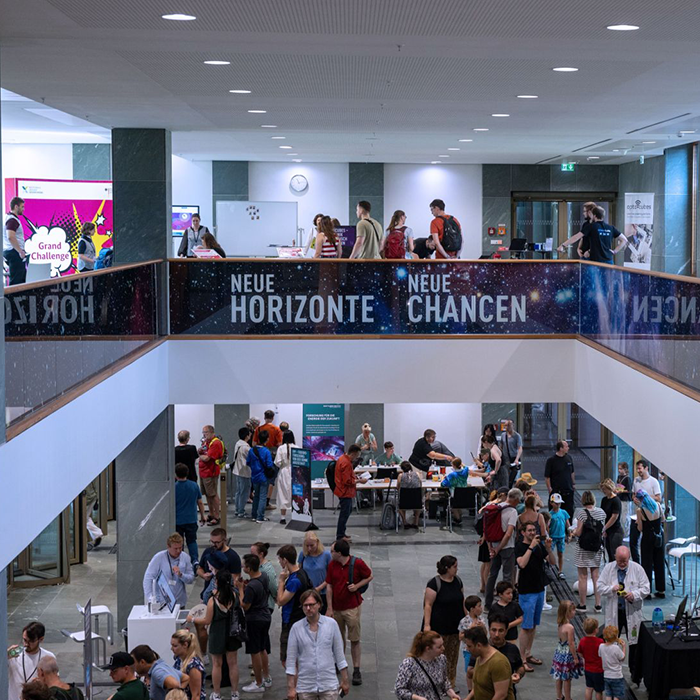
Gazing into the Black Box AI
Experts from Fraunhofer HHI and BIFOLD showcased an AI-assisted image evaluation technique at the BMBF Open Day. The demonstration gave an example of how Artificial Intelligence arrives at its decisions and sparked a dialogue on Explainable AI between professionals and attendees. Thanks to everyone who joined us in Berlin.
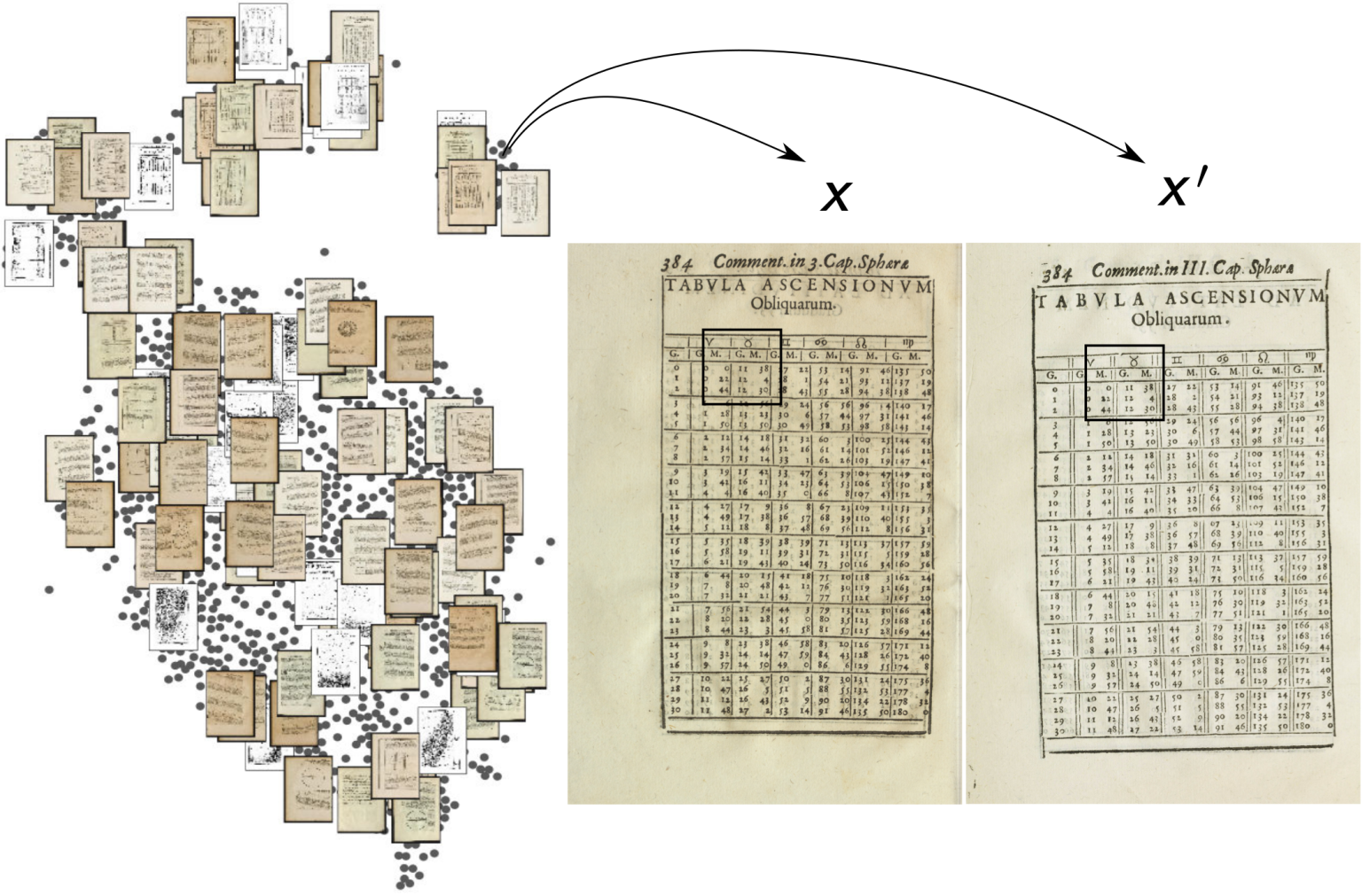
The shared scientific identity of Europe
The project Sphere: Knowledge System Evolution and the Shared Scientific Identity of Europe is one of the leading Digital Humanities projects, exploring a large corpus of more than 350 book editions about geocentric cosmology and astronomy from the early days of printing between the 15th and the 17th centuries (Sphaera Corpus) for about 76.000 pages of material. The relatively large size of this humanities dataset presents a challenge to traditional historical approaches, but provides a great opportunity to computationally explore such a large collection of books. In this regard, the Sphere project is an incubator of multiple Digital Humanities (DH) approaches aimed at answering various questions about the corpus, with the ultimate objective to understand the evolution and transmission of knowledge in the early modern period.