




Supporting the Advancement of the Institute
The Berlin Institute for the Foundations of Learning and Data (BIFOLD) has officially established its Advisory Board as of May 1. The new consultative body brings together four internationally renowned researchers in machine learning, its application to the sciences, data science research, and data management. Nominated for an initial period of three years, they will support the advancement of the institute and its research agenda. BIFOLD warmly welcomes the opportunity to collaborate closely with these four distinguished experts and looks forward to the valuable guidance and expertise they will bring to the institute.
About the Advisory Board
Nesime Tatbul
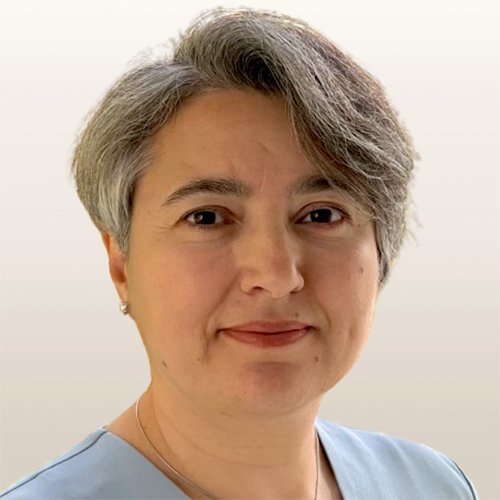
Senior Research Scientist, Intel Labs & MIT DSAIL Nesime Tatbul is jointly affiliated with Intel Labs and the MIT Data Systems and AI Lab (DSAIL), where she has served as Intel's research lead since 2013. Her work focuses on large-scale data systems, time series analytics, and stream processing; she co-developed the Aurora/Borealis systems, commercialized as TIBCO StreamBase, and S-Store, the world's first streaming OLTP system. She holds a PhD from Brown University, previously served on the computer science faculty of ETH Zurich, and has received the CIDR Test of Time Award (2025) and the ACM SIGMOD Best Paper Award (2021). She is Editor-in-Chief for the Americas of the VLDB Journal, an ACM Distinguished Member, and an IEEE Senior Member.
Cecilia Clementi
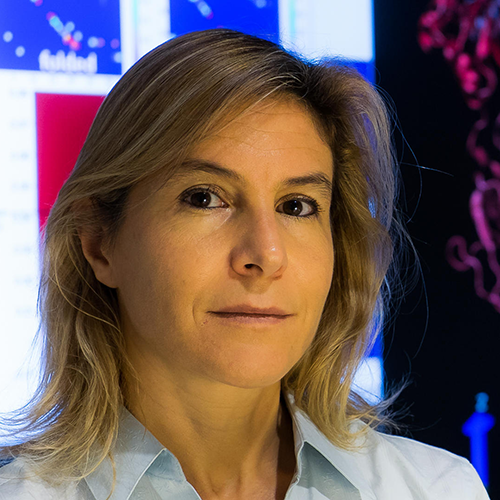
Einstein Professor, Freie Universität Berlin Cecilia Clementi holds the Einstein Professorship for Theoretical and Computational Biophysics at Freie Universität Berlin, where she leads the Working Group Theoretical & Computational Biophysics within the Institute for Physics. Her research operates at the intersection of computational modeling, biophysics, and applied mathematics, developing multiscale models, adaptive sampling approaches, and data-driven coarse-graining methods to bridge simulations and experiments. She studied physics in Florence, obtained her PhD at SISSA, and held a full professorship in chemistry at Rice University until 2019, when she became the first scientist to be permanently recruited to Berlin following the Einstein Visiting Fellowship program. Her honors include the NSF CAREER Award and the Robert A. Welch Foundation Norman Hackerman Award.
Yannis Ioannidis
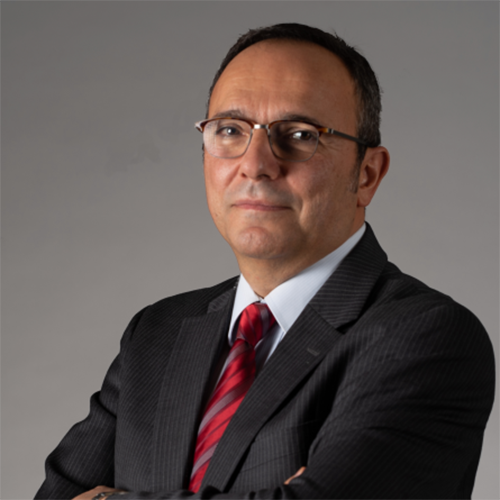
President, ACM; Professor, National and Kapodistrian University of Athens. Yannis Ioannidis is Professor of Informatics at the National and Kapodistrian University of Athens and currently serves as President of the Association for Computing Machinery (ACM), the world's largest scientific and educational computing society. He is also affiliated with the ATHENA Research and Innovation Center, which he led as President and General Director from 2011 to 2021. His research covers database and information systems, data science, scalable data processing, digital repositories, and recommender systems. He received his PhD from UC Berkeley in 1986 and rose to full professor at the University of Wisconsin–Madison before returning to Greece in 1999. He is an ACM Fellow, an IEEE Fellow, and a member of Academia Europaea, and is a recipient of the VLDB 10-Year Best Paper Award.
Masashi Sugiyama
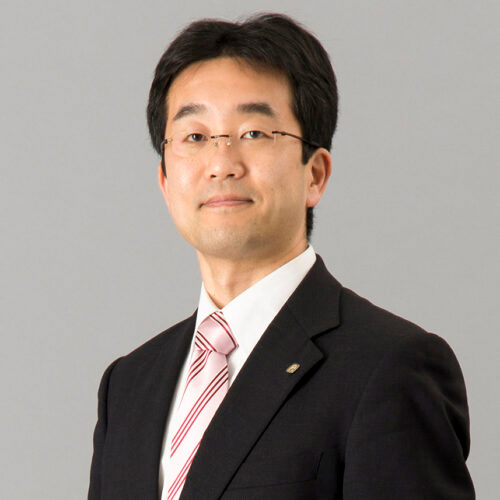
Director, RIKEN AIP; Professor, The University of Tokyo. Masashi Sugiyama is Director of the RIKEN Center for Advanced Intelligence Project (RIKEN AIP), Japan's flagship national center for advanced AI research, and Professor in the Department of Complexity Science and Engineering at The University of Tokyo. His research spans statistical machine learning, data mining, signal and image processing, and robot control, with a focus on covariate shift adaptation, density ratio estimation, weakly supervised learning, and reinforcement learning. He has authored major textbooks published by MIT Press, Cambridge University Press, and others. He completed his Doctor of Engineering at the Tokyo Institute of Technology in 2001 and has held his current positions at the University of Tokyo since 2014 and at RIKEN AIP since 2016. His ties to the German research community date back to his time as an Alexander von Humboldt Research Fellow at the Fraunhofer Institute in Berlin (2003–2004).