

AI in Medicine 2025 | Speakers
ALBER, PhD MAXIMILIAN
Co-Founder & CTO Aignostics
Maximilian (Max) Alber works in the intersection of artificial intelligence and healthcare. He is the Co-Founder and CTO of Aignostics, an AI company based and spun out of Charité and TU Berlin that turns complex biomedical data into transformative insights for leading biopharma companies. Max currently leads the technology organization and overall ML strategy at Aignostics, with a focus on deriving insights for drug discovery, translational research, and clinical trials. Most recently, Max led the development for Aignostics’ industry-leading foundation model for histopathology built in collaboration with Mayo Clinic.
Keynote: Pathology foundation models - from translational research to health-care
Abstract >

Böhm, Prof. Dr. Matthias
BIFOLD
Matthias Boehm is a full professor for large-scale data engineering at Technische Universität Berlin and the BIFOLD center of excellence for AI research. His research group focuses on high-level, data science-centric abstractions as well as systems and tools to execute these tasks in an efficient and scalable manner. From 2018 through 2022, Matthias was a BMK-endowed professor for data management at Graz University of Technology, Austria, and a research area manager for data management at the co-located Know-Center GmbH. Prior to joining TU Graz in 2018, he was a research staff member at IBM Research - Almaden, CA, USA, with a major focus on compilation and runtime techniques for declarative, large-scale machine learning in Apache SystemML. Matthias received his Ph.D. from Dresden University of Technology, Germany in 2011 with a dissertation on cost-based optimization of integration flows. His previous research also includes systems support for time series forecasting as well as in-memory indexing and query processing.
Burger, MSc Manuel
ETH Zürich, Department of Computer Science, Biomedical Informatics Group
I have obtained my Bachelor's Degree in Computer Science, followed by a Master's Degree in Data Science at ETH Zürich. I have always been fascinated by the capabilities of modern computer hardware, and thus ventured into the world of HPC during my bachelor's degree. This led me to learn about my fascination for machine learning and the powerful applications we can develop by using the computing capabilities available to us. I started to focus my path towards data science in the biomedical and health care domain. My aim is to contribute to improved health care and I thus joined the Biomedical Informatics Group at ETH as a Ph.D. student in 2022.
My fields of interest are centered around representation learning. I am especially excited about structural priors for representation learning on biomedical data. Learning from structure enables more flexible and expressive machine learning solutions, and at the same time develop more interpretable and robust models.
Calixto, Dr. Iacer
Assistant professor Department of Medical Informatics, Amsterdam UMC
Iacer Calixto has a background in Computer Science, Natural Language Processing, and Machine Learning, and obtained his PhD from Dublin City University (2017) on the topic of integrating visual information in machine translation. He was a Marie-Curie Postdoctoral Fellow visiting the New York University Courant Institute of Mathematical Sciences, and currently leads the NLP4Health Lab in the Department of Medical Informatics of the University of Amsterdam. His lab, including 6 PhD students and 2 postdocs, tackles the methodological bottlenecks necessary to take NLP methods from bench to clinical practice: how to guarantee patient privacy, quantifying the uncertainty of large language models (LLMs), integrating data from multiple modalities (e.g., structured data, medical images, time series, text), how to make NLP models interpretable and explainable. Finally, Iacer focuses on real-world problems across a number of high-impact clinical specialties, such as cardiology and intensive care medicine. He holds an NWO AiNED Fellowship (2024-2029) and is involved in the EU projects DataTools4Heart (which goal is the development of a toolbox for clinicians, researchers, and data scientists) and Medispeech (which goal is to automate the reporting of doctor-patient consultations using LLMs).
Impulse: Evaluating LLMs in healthcare: uncertainty quantification and evaluating for clinical understanding
Abstract >
Corbeil, Prof. Dr. Jacques
Professor of Medicine and Canada Research Chair in Medical Genomics
Dr. Jacques Corbeil is a pioneering researcher operating at the intersection of machine learning and omics sciences, with over two decades of experience in medical genomics and bioinformatics. As the former Canada Research Chair in Medical Genomics (Tier 1, 2003-2024), Dr. Corbeil has established himself as a leader in applying artificial intelligence to complex biological challenges.
His research leverages state-of-the-art computational approaches to transform how we diagnose disease, predict treatment outcomes, and understand biological systems. Dr. Corbeil specializes in developing novel machine learning algorithms for interpreting the massive datasets generated by modern genomics and metabolomics platforms, including high-throughput mass spectrometry and next-generation sequencing.
His laboratory investigates critical biomedical questions including host-pathogen interactions, the impact of antibiotics on microbial communities and environmental health, and the design of targeted therapeutics for infectious diseases and cancer. A particular strength is his expertise in multi-omics data integration, combining metabolomics, genomics, and clinical data to create comprehensive disease models.
Dr. Corbeil maintains extensive collaborations with industry partners, helping organizations implement AI strategies and optimize their analytical processes. His work bridges the gap between computational innovation and clinical application, with a focus on translating big data analytics into actionable insights for precision medicine. His contributions have been instrumental in advancing our understanding of infectious disease dynamics and cancer progression through the lens of systems biology and artificial intelligence.
Keynote
Transforming Metabolomics Through Machine Learning and Generative AI: From Automated Workflows to Precision Medicine Applications
Abstract >
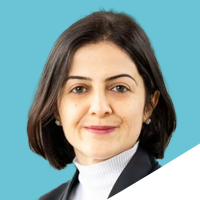
Demir, Prof. Dr. Begüm
BIFOLD, RSiM Research Group Lead
Begüm Demir is currently a Full Professor and the founder head of the Remote Sensing Image Analysis (RSiM) group at the Faculty of Electrical Engineering and Computer Science, TU Berlin and the head of the Big Data Analytics for Earth Observation research group at the Berlin Institute for the Foundations of Learning and Data (BIFOLD). Her research activities lie at the intersection of machine learning, remote sensing and signal processing. Specifically, she performs research in the field of processing and analysis of large-scale Earth observation data acquired by airborne and satellite-borne systems. She was awarded by the prestigious '2018 Early Career Award' by the IEEE Geoscience and Remote Sensing Society for her research contributions in machine learning for information retrieval in remote sensing. In 2018, she received a Starting Grant from the European Research Council (ERC) for her project "BigEarth: Accurate and Scalable Processing of Big Data in Earth Observation". She is an IEEE Senior Member and Fellow of European Lab for Learning and Intelligent Systems (ELLIS).

Eickhoff, Prof. Dr. Carsten
Health NLP, University of Tübingen + Brown University
Carsten is a Professor of Medical Data Science and Computer Science at the University of Tübingen where his lab specializes in the development of machine learning and natural language processing techniques with the goal of improving patient safety, individual health, and quality of medical care. Prior to joining Tübingen, he was the Manning Assistant Professor of Medical and Computer Science at Brown University. He received degrees from the University of Edinburgh and TU Delft, and was a postdoctoral fellow at ETH Zurich and Harvard University. Carsten has authored more than 150 articles in computer science conferences (e.g., ICLR, ACL, SIGIR, WWW, KDD) and clinical journals (e.g., Nature Digital Medicine, The Lancet - Respiratory Medicine, Radiology, European Heart Journal). His research has been supported by the Swiss National Science Foundation, NSF, NIH, DARPA, IARPA, Google, Amazon, Microsoft and others. Aside from his academic endeavors, he is a founder and board member of several deep technology startups in the health sector that strive to translate technological innovation to improved safety and quality of life for patients.
Keynote
Juggling 1.8T Balls - The Frontier of LLM Interpretation
Abstract >
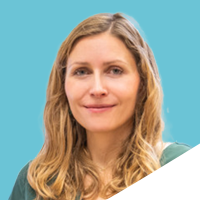
Engelhardt, Prof. Dr. Sandy
Head of the Institute for Artificial Intelligence in Cardiovascular Medicine at Heidelberg University Hospital and Medical Faculty of Heidelberg University
Sandy Engelhardt, PhD is Full Professor and Head of the Institute for Artificial Intelligence in Cardiovascular Medicine at Heidelberg University Hospital and Medical Faculty of Heidelberg University. The main research goal of her group is to leverage multimodal AI in image processing for cardiovascular precision medicine and to support surgeons with computer-assisted tools. Her dissertation won the BVM-Award 2017 for the best PhD thesis on the German Image Processing Community.
She is responsible for the multicentric Federated Learning Initiative in the German Center for Cardiovascular Research and is speaker of the MultidimensionAI consortium funded by the Carl Zeiss Foundation by 5 Mio €. Furthermore, she is Program Chair of this year’s ESC Digital and AI Summit organized by the European Society of Cardiology.
Impulse
Multimodal and Multicentric AI for Cardiovascular Medicine
Abstract >
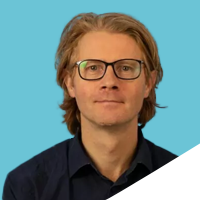
Gilbert, Prof. Dr. Stephen
Technische Universität Dresden
Prof. Dr. Gilbert worked in senior MedTech and Digital Heath roles in industry for 5 years, before returning to academia in 2022 in Dresden, Germany as Europes first full Professor of Medical Device Regulatory Science for AI and Digital Health, where he teaches and conducts research. His research goals are the advancement of regulatory science in digital medicine and AI-enabled medical devices. Innovative digital approaches in healthcare must be accompanied by innovative regulatory and oversight approaches to ensure speed to market, to maximise the access of patients to life saving treatments while at the same time ensuring safety on market.
Keynote: If AI is explainable then is it okay? Regulation, explainability in the age of all-pervasive and all-persuasive “generative” health and medical AI.
Abstract >
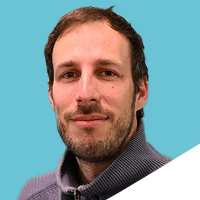
Gröschel, Dr. Dr. Matthias
Charité - Universitätsmedizin Berlin
I am a resident physician in internal medicine and junior group leader at Charité - Universitätsmedizin Berlin. My group's research interest centers around the use of next generation sequencing and epidemiological data to improve our understanding of Mycobacterium tuberculosis transmission. We develop and test the applicability of large language models in clinical medicine. Previously, I was a research fellow at the Department of Biomedical Informatics at Harvard Medical School. Before that, I graduated with an MD-PhD from the University of Groningen, The Netherlands. My doctoral research took place at the Institut Pasteur Paris where I generated BCG mutants including ESX-1 secretion systems to improve on BCG vaccine efficacy.
Hauschild, Prof. Dr. Anne-Christin
University Medical Center Göttingen
Hohendanner, PD Dr. Felix
Deutsches Herzzentrum der Charité
Kaboli, Prof. Dr. Mohsen
Eindhoven University of Technology
Dr. Mohsen Kaboli is a professor of Embodied AI, Robotics, and Tactile Intelligence at Eindhoven University of Technology (TU/e) in the Netherlands. He is the head of Embodied Interactive Perception & Robot Learning Lab (RoboTac). Additionally, he is the Lead of AI, Robotics & Cognitive Vehicle research lab at BMW Group, Center of Invention in Munich, Germany, a role he has held since 2018. Previously, Dr. Kaboli held the position of assistant professor at the Institute for Brain and Cognition at Radboud University in the Netherlands from 2019 to 2022. He was a group leader of tactile robotic and postdoctoral research fellow at the Institute for Advanced Studies (IAS), the Technical University of Munich (TUM), Germany from September 2017 till August 2018. He received his Ph.D. degree with the highest distinction (summa cum laude) in robotics focusing on interactive tactile perception and learning in robotics from TUM in 2017. He was awarded the best European Ph.D. thesis prize in tactile robotics, Georges Giralt Ph.D. Award (finalist).
Dr. Kaboli is the inventor or co-inventor of nearly 20 patents and has authored approximately 40 journal papers, conference proceedings, and editorials. He also serves as an Editor and Associate Editor for several leading journals and conferences, including IEEE ICRA, IROS, R-AL, T-RO, & IJRR. His research over the past 15 years has been bridging several research domains, the most important ones being tactile intelligence, AI, and robotics. This also been acknowledged by the IEEE, when being named IEEE Senior Member in 2018 for his contributions in AI and Robotics. Dr. Kaboli and his team research have been awarded several awards, IEEE ICRA outstanding paper award in perception (finalist) ICRA 2023, IEEE FLEPS outstanding student award (winner) 2022, IEEE ROSE outstanding paper award (winner) 2024.
Keynote: AI-Enabled Multimodal Perception & Learning for Robust In-Vehicle Vital Sign Monitoring
Abstract >
Klauschen, Prof. Dr. med. Dipl.-Phys. Frederick
Institute of Pathology, LMU Medizin München & BIFOLD - Charité Berlin
Prof. Dr. Frederick Klauschen is the Director of the Institute of Pathology at Ludwig Maximilian University and Research Group Lead at BIFOLD & the Charité Institute of Pathology. He is also Dean of Research at LMU Medizin and member of the board of directors of the Bavarian Cancer Research Center. In 2024, he was elected member of the Leopoldina. Before joining the Charité, he was a postdoctoral fellow at the National Institutes of Health (NIH). He holds an M.D. from the University of Lübeck and a masters degree in physics from the University of Hamburg. His research focuses on artificial intelligence in medicine, as well as the integration of imaging-based histological and molecular methods in cancer research. His goal is to better understand pathological mechanisms in order to improve the diagnosis and treatment of cancer.
Keynote
Multimodal AI in Cancer Research and Diagnostics
Abstract >
Kleesiek, Prof. Dr. Jens
Universitätsmedizin Essen

Kroemer, Prof. Dr. Heyo
Charité - Universitätsmedizin Berlin
Müller, Prof. Dr. Klaus-Robert
BIFOLD
Moor, Prof. Dr. Michael
ETH Zürich

Ohler, Prof. Dr. Uwe
Max Delbrück Center
Uwe Ohler studied computer science with a minor in biology at the University of Erlangen-Nuremberg. During a student research project involving computational DNA sequence analysis, he became fascinated with machine learning and computational biology. He started his PhD research at the Chair for Pattern Recognition at the same university and obtained his PhD with distinction for machine learning approaches to annotate promoters in eukaryotic genomes.
He worked as a postdoctoral researcher in the Department of Biology at the Massachusetts Institute of Technology, then joined the faculty of the Institute of Genome Sciences & Policy at Duke University. During this time, he received fellowships from the Alfred P Sloan Foundation, as well as HFSP, NSF CAREER, and NIH Transformative Research awards.
Since 2012, Uwe Ohler has been Professor at the Max Delbrueck Center in Berlin, he has coordinated the MDC Data Science & Artificial Intelligence cross-cutting topic area, and he co-directed two graduate programs - the Helmholtz Einstein International Berlin School in Data Sciences HEIBRiDS and a DFG-funded International Research Training Group. He is a fellow of the Berlin Institute for the Foundations of Learning and Data.
Impulse Computational Genomics: Decoding gene regulation: from multimodal data integration to the prediction of functional genetic variation
Abstract >
Penzkofer, Prof. Dr. Tobias
Charité - Universitätsmedizin Berlin

Rauch, Prof. Dr. Geraldine
Technische Universität Berlin
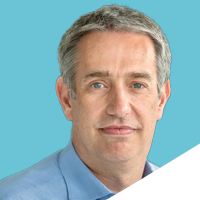
Rückert, Prof. Dr. Daniel
Munich Center for Machine Learing
Daniel Rückert is Alexander von Humboldt Professor for AI in Medicine and Healthcare at the Klinikum rechts der Isar, Technical University of Munich, where he is also Director of the Institute for AI and Informatics in Medicine. He is also a Professor of Visual Information Processing in the Department of Computing at Imperial College London. As part of his research activities, he has published over 500 journal and conference articles with over 100,000 citations (h-index 137), graduated over 50 PhD students and supervised and mentored over 40 post-docs. Currently, he is a senior member of the editorial board of Medical Image Analysis, and has served as an associate editor of IEEE Transactions on Medical Imaging, IEEE Transactions on Pattern and Machine Intelligence and Image and Vision Computing and as a referee for several international journals and conferences in the area of Artificial Intelligence, Computer Vision and Medical Imaging. He has been elected as Fellow of the MICCAI Society (2014), Fellow of the Royal Academy of Engineering in the UK (2015), Fellow of the IEEE (2015), Fellow of the Academy of Medical Sciences in the UK (2019), Fellow of the German National Academy of Sciences Leopoldina (2023) and Fellow of the Royal Society in the UK (2025). In 2024 he received the MICCAI Enduring Impact Award for his contributions to medical image computing. He is recipient of the Gottfried Wilhelm Leibniz Prize (2025), which is the most important German research prize endowed with €2.5M by the German Research Foundation (DFG).
Opening Talk
AI and the Future of Medicine
Abstract >
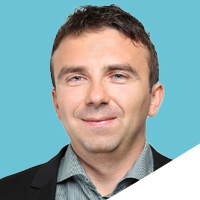
Samek, Prof. Dr. Wojciech
Fraunhofer Heinrich Hertz Institute
Wojciech Samek is a Professor in the EECS Department at the Technical University of Berlin and the Head of the AI Department at the Fraunhofer Heinrich Hertz Institute (HHI) in Berlin, Germany. He earned a Dipl-Inf. degree in Computer Science from Humboldt University of Berlin in 2010 and a Ph.D. (with honors) from the Technical University of Berlin in 2014. Following his doctorate, he founded the "Machine Learning" Group at Fraunhofer HHI, which became an independent department in 2021. He is a Fellow at BIFOLD – the Berlin Institute for the Foundation of Learning and Data and the ELLIS Unit Berlin. He also serves as a member of Germany’s Platform for AI and sits on the boards of AGH University’s AI Center, the Helmholtz Einstein School in Data Science (HEIBRiDS), and the DAAD Konrad Zuse School ELIZA. Dr. Samek’s research in explainable AI (XAI) spans method development, theory, and applications, with pioneering contributions such as Layer-wise Relevance Propagation (LRP), advancements in concept-level explainability, evaluation of explanations, and XAI-driven model and data improvement. He has served as a senior editor for IEEE TNNLS, held associate editor roles for various other journals, and acted as an area chair at NeurIPS, ICML, and NAACL. He has received several best paper awards, including from Pattern Recognition (2020), Digital Signal Processing (2022), and the IEEE Signal Processing Society (2025). Overall, he has co-authored more than 250 peer-reviewed journal and conference papers, and has been recognised as Highly Cited Researcher 2025.
Keynote
Hallucinations, Explanations, and Insights: Challenges of Understanding AI in the LLM Era
Abstract >
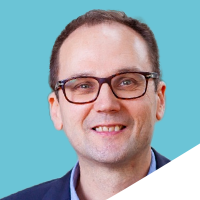
Schäffter, Prof. Dr. Tobias
Physikalisch-Technischen Bundesanstalt
Prof. Dr. Tobias Schäffter studied electrical engineering and computer science at the Technische Universität (TU) Berlin until 1993. He obtained his PhD in 1996 on fast spectroscopic magnetic resonance (MR) imaging for the investigation of brain metabolism at the University of Bremen (Prof. Leibfritz). From 1996-2006, he worked as Principal Scientist at Philips Research in Hamburg on new MR techniques and managed their clinical evaluation and product integration.
In 2006, he accepted an appointment as Professor in Imaging Sciences at King's College London, where performed research and headed a doctoral training centre in medical imaging. From 2012 to 2015 he was the department head of biomedical engineering and deputy head of the Division. Since 2015, he has headed the Division "Medical Physics and Metrological Information Technology" at the Physikalisch-Technische Bundesanstalt (PTB) in Berlin, where he is responsible for the development of new quantitative measurement techniques in medicine and information technology. Since 2019 he acts as the Head of the Berlin Institute of the PTB and is also a Professor of Biomedical Imaging at the TU-Berlin and the Einstein Centre Digital Future. Prof. Schäffter is member of the Berlin-Brandenburg Academy of Sciences and Humanities (BBAW) and the National Academy of Science and Engineering (acatech).
Keynote
AI in Medicine: Data Quality and Benchmark Tests
Abstract >

Schelter, Prof. Dr. Sebastian
BIFOLD
von Lühmann, Dr. Alexander
BIFOLD
Zeuch, Dr. Steffen
BIFOLD
Steffen Zeuch is a Postdoctoral Researcher at TU Berlin, working with Prof. Volker Markl, IAM, and DIMA, as well as Junior Research Group Lead at BIFOLD.
Impulse
NEEDMI: NebulaStream for Effective Development and Deployment of Machine Learning Models for Intensive Care Units