

Speaker Summer School 2026

Dr. Sayantan Auddy
Technische Universität Berlin
Hands-on Session
Designing autonomous systems that behave as intended is harder than it may appear. In this hands-on session, participants will train an AI agent in a simulation to perform a robotic manipulation task using reinforcement learning, a trial-and-error learning paradigm in which the agent improves through experience. The central challenge is to define the "reward function", which is the mathematical objective that tells the agent what to optimize for, and through which human intentions must be translated into machine behavior. Through a guided progression of increasingly refined objectives, participants will experience how seemingly small specification choices can lead to different and potentially unsafe behaviors, building practical intuition for a fundamental challenge in building trustworthy AI.
Bio >

Lennart Bürger
Fraunhofer HHI
In-depth lecture with Hands-on: Detecting the Lies of Deceptive AI
Modern Large Language Models (LLMs) sometimes display a concerning tendency to lie and deceive. In this talk, we explore why and when LLMs engage in deception. We examine instances of this behavior in current model, such as models faking alignment with their developers' objectives, or lying to achieve a goal set in context, and discuss what makes deceptive tendencies especially concerning in future, more capable AI systems. In the second half of the lecture, we turn to recent research on "lie detectors" for LLMs, which hold promise for catching such behavior, reviewing current approaches along with their limitations.
The lecture is aimed at a general scientific audience. The second half introduces a few more technical elements, for which a background in LLMs and machine learning is helpful but not required.
The lecture is followed by a hands-on session in which participants reproduce a simple LLM lie detector in a Jupyter notebook. Basic Python skills are necessary, and some familiarity with machine learning is helpful. Please bring your laptop.
Bio >

Dr. Thorsten Eisenhofer
CISPA Helmholtz Center for Information Security
In-depth lecture with Hands-on: Trustworthy Agentic Systems
Agentic AI systems are moving from research prototypes to real-world software ecosystems, where they can access data, APIs, tools, and operational processes. While this makes complex technologies more accessible, it also introduces new security risks: every layer of the agentic stack can become an attack surface.
This session explores how autonomous AI systems are built, where security boundaries fail, and what researchers and practitioners may need to consider when designing more trustworthy agentic systems. In a mix of theoretical presentations and practical tasks, we will examine emerging attack vectors, architectural weaknesses, and strategies for securing agentic systems in sensitive and high-impact domains.
Bio >

David Hartmann
Weizenbaum-Institut e.V.
Input & Hands-on: What Does this Number Even Mean? A Critical Introduction to AI Benchmarks and Evaluation
Benchmarks and evaluations play a central role in determining what counts as "performant," "safe," and "responsible" AI and shape AI's use as a research instrument. This workshop treats benchmarks as epistemic artefacts and asks what their scores actually measure. Two short inputs introduce benchmarks as artefacts, their datasets, annotations, and design choices, and the notion of construct validity, the question of whether a measurement captures the concept it claims to. Participants then critically assess two benchmark types, for performance and for "AI safety," first reconstructing their underlying measurement model, then probing them directly. Participants systematically perturb inputs to see when and how scores break down. The workshop closes by drawing out the implications for validity, reproducibility, and reliability in participants' own research, and for how we should read AI leaderboards.
Bio >

Dr. Angelie Kraft
Weizenbaum-Institut e.V.
Input & Hands-on: What Does this Number Even Mean? A Critical Introduction to AI Benchmarks and Evaluation
Benchmarks and evaluations play a central role in determining what counts as "performant," "safe," and "responsible" AI and shape AI's use as a research instrument. This workshop treats benchmarks as epistemic artefacts and asks what their scores actually measure. Two short inputs introduce benchmarks as artefacts, their datasets, annotations, and design choices, and the notion of construct validity, the question of whether a measurement captures the concept it claims to. Participants then critically assess two benchmark types, for performance and for "AI safety," first reconstructing their underlying measurement model, then probing them directly. Participants systematically perturb inputs to see when and how scores break down. The workshop closes by drawing out the implications for validity, reproducibility, and reliability in participants' own research, and for how we should read AI leaderboards.
Bio >

Kyle Steven Krüger
Institute for Artificial Intelligence in Medicine (IKIM, Charité & BIFOLD
Sovereign Agents and/or Anarchy: Creating prototypes in regulated domains
Self-hosted models come with few guardrails.
Thus, even if not malicious, simple sovereign agents might not respect rules and regulations.
Given autonomy, it can seem like these agents tend towards anarchy; this is unacceptable in sensitive environments.
Best practices for introducing autonomy without anarchy use multi-layer safeguards, and setting these up at the start of a project may seem daunting.
In this session, a pragmatic development-environment used in a collaboration project between the Institute of AI in Medicine of the Charité and BIFOLD is shared.
Participants are invited to explore the capabilities of agents in this minimalistic restrictive environment and discuss its usefulness and shortcomings.
Bio >
Christoph Lange
KIWI Biolab at Technische Universität Berlin
Lecture with Hands-On: Faster Bioprocess development in a self-driving laboratory
Lecture: Mastering the fed-batch feeding strategy is vital to maximize bioprocess yields, yet living systems' stochasticity present a challenging landscape for automated control. Therefore, Reinforcement Learning (RL) introduces an agile solution, utilizing autonomous agents that learn feeding strategies through direct environment interaction. In particular, the learning agent must navigate critical hidden states caused by a lack of online monitoring methods, compounded by severe time delays in at-line measurements. Additionally, it must satisfy strict state constraints to avoid irreversible points of no return, like cell death. We demonstrate how robust RL frameworks conquer these delayed, partially observable environments, managing highly stochastic initial batch phases to secure optimal production.
Hands-On: In this interactive session, participants will use our web-based simulation environment to navigate the classic exploration-versus-exploitation trade-off when training autonomous agents for E. coli fed-batch cultivations. You will first attempt to manually schedule feed rates, experiencing firsthand how quickly fast biological dynamics can trigger catastrophic metabolic overflow or cell starvation. Transitioning to automated control, you will then experiment with reward function shaping to navigate biomass yield, substrate limits, and productivity penalties.
Bio >

Professor Dr. Rudolf Lioutikov
Karlsruhe Institute of Technology (KIT)
In-depth lecture: Towards On-Premise Behavior Foundation Models
The remarkable advances in generative AI have sparked a new wave of robotics research leveraging Diffusion / Flow Matching Models and Vision Language Models, with the ultimate goal of developing Behavior Foundation Models for robotic systems. However, current state-of-the-art approaches face significant limitations that hinder widespread deployment: these models are exceptionally large, resource-intensive, and slow, while requiring vast amounts of diverse data for pre-training VLM-based models on spatial and robotic tasks. These constraints, combined with critical privacy concerns, severely limit the practical deployment of foundation models in real-world robotic applications.
In this talk, we will explore recent approaches to addressing these limitations across the full model stack. We will look at more compute- and parameter-efficient architectures for diffusion-based policies that maintain strong performance while significantly reducing inference cost. We will discuss compact vision-language-action models that achieve strong performance through novel multimodal fusion and action generation mechanisms. We will examine a structured action representation based on movement primitives that improves both performance and sample efficiency over standard tokenization approaches. We will also take a closer look at the spatial reasoning gap in current vision-language backbones, and how a targeted auto-annotation pipeline can generate high-quality training data specifically aimed at increasing spatial reasoning capabilities. Together, these threads sketch a concrete path towards Behavior Foundation Models that are efficient and data-frugal enough for on-premise deployment in real-world robotic applications.
Bio >

Dr. Vince Madai
BIH Berlin Institute of Health
In-depth Lecture: Responsible Design of Autonomous AI Systems: From Ethical Principles to Practice
The rapid evolution of artificial intelligence is increasingly moving from passive decision-support tools toward more autonomous AI systems capable of interpreting complex information, generating recommendations, interacting with users, and initiating or coordinating actions. This development demands a renewed focus on responsible design to ensure that such systems are not only technically capable, but also ethically justified, robust, transparent, and socially trustworthy.
While broad consensus has emerged around principles for trustworthy and responsible AI, a major gap remains in translating these principles into concrete design choices, governance structures, validation practices, and implementation procedures. This challenge becomes especially urgent as autonomous AI systems are deployed in complex, high-risk real-world settings, where their outputs may influence human decisions, institutional workflows, access to services, allocation of resources, and accountability structures.
This talk explores how responsible AI can move from abstract ethical principles toward more concrete forms of practice. It will examine key challenges raised by autonomous AI systems. Healthcare will be used as an illustrative high-stakes example, but the broader focus is on responsible design considerations that are relevant across domains. The aim is to critically discuss what it means to operationalize ethical principles in the design, validation, deployment, and oversight of autonomous AI systems.
Bio >
Professor Dr. Ernesto Martinez
KIWI Biolab at Technische Universität Berlin
Lecture with Hands-On: Faster Bioprocess development in a self-driving laboratory
Lecture: Mastering the fed-batch feeding strategy is vital to maximize bioprocess yields, yet living systems' stochasticity present a challenging landscape for automated control. Therefore, Reinforcement Learning (RL) introduces an agile solution, utilizing autonomous agents that learn feeding strategies through direct environment interaction. In particular, the learning agent must navigate critical hidden states caused by a lack of online monitoring methods, compounded by severe time delays in at-line measurements. Additionally, it must satisfy strict state constraints to avoid irreversible points of no return, like cell death. We demonstrate how robust RL frameworks conquer these delayed, partially observable environments, managing highly stochastic initial batch phases to secure optimal production.
Hands-On: In this interactive session, participants will use our web-based simulation environment to navigate the classic exploration-versus-exploitation trade-off when training autonomous agents for E. coli fed-batch cultivations. You will first attempt to manually schedule feed rates, experiencing firsthand how quickly fast biological dynamics can trigger catastrophic metabolic overflow or cell starvation. Transitioning to automated control, you will then experiment with reward function shaping to navigate biomass yield, substrate limits, and productivity penalties.
Bio >

Professor Dr. Peter Neubauer
Technische Universität Berlin
In-depth Lecture: Faster Bioprocess development in a self-driving laboratory
Traditional bioprocess development is bottlenecked by manual workflows that isolate early discovery from industrial processes. This talk introduces how self-driving laboratories (SDLs) can bridge this gap by establishing an autonomous, closed-loop feedback system. By substituting manual choice with AI-driven active learning, agents employ algorithmic objective functions to guide intelligent selection across complex biological design spaces. This approach allows the early deployment of Quality by Design (QbD) principles directly inside automated, high-throughput mini-bioreactors. Crucially, the system utilizes multi-objective optimization to improve volumetric productivity across scales. Transforming the workflow into a scalable, automated cycle shifts process control to the initial design phase, accelerating the pipeline to manufacturing.
Bio >

Professor Dr. Iyad Rahwan
Max Planck Institute for Human Development
Keynote: Science Fiction Science
Can we predict the social and behavioral impacts of future technologies, such as Artificial Intelligence, while they are still being developed in scientific labs, or even when they are just imaginations in the minds of a science fiction writer? Such prediction would allow us to guide development and regulation of technologies before their impacts get entrenched. This talk describes ‘science fiction science’ (sci-fi-sci), the use of experimental methods to simulate future technologies, and collect quantitative measures of the attitudes and behaviors of participants assigned to controlled variations of the future. I present various recent sci-fi-sci projects aimed at anticipating the societal impacts of Artificial Intelligence, and discuss the potential and limitations of this form of science.
Bio >

Dr. Lisa Raithel
Technische Universität Berlin, BIFOLD
Hands-On Session: Anonymize, Then Break It: Re-identification Risk in Clinical NLP
Anonymizing medical text (and other data) is harder than it looks because simply removing a name is not sufficient: a diagnosis, a hometown, a mentioned medication can be enough to identify someone, and GDPR and HIPAA do not even agree on what counts as safe. In this session, participants evaluate the outputs of a de-identification pipeline on clinical and patient forum text, then switch roles and try to re-identify a supposedly anonymized document themselves, using only what was left behind. Groups discuss where the redaction line should sit, and who gets to draw it: the patient, the researcher, or the system.
Bio >

Dr. Lea Schönherr
CISPA Helmholtz Center for Information Security
In-depth lecture with Hands-on: Trustworthy Agentic Systems
Agentic AI systems are moving from research prototypes to real-world software ecosystems, where they can access data, APIs, tools, and operational processes. While this makes complex technologies more accessible, it also introduces new security risks: every layer of the agentic stack can become an attack surface.
This session explores how autonomous AI systems are built, where security boundaries fail, and what researchers and practitioners may need to consider when designing more trustworthy agentic systems. In a mix of theoretical presentations and practical tasks, we will examine emerging attack vectors, architectural weaknesses, and strategies for securing agentic systems in sensitive and high-impact domains.
Bio >

Professor Dr. Judith Simon
Universität Hamburg
Keynote: Trustworthy AI? Epistemological and Ethical Aspects
AI in its various forms affects us on a daily basis. AI is used both in science and in everyday life for pattern recognition, classification, prediction and decision support, and the use of Generative AI for communication, information and the production of new content has skyrocketed since 2022. However, AI systems pose various epistemic and ethical challenges, related to accuracy, bias and discrimination; a lack of transparency and accountability; sustainability and numerous other concerns. Thus, while we seem to rely on AI on a daily basis, the question remains whether we can trust it – and whether we should. I will argue that we can trust AI systems, if and only if we conceive them as socio-technical systems, but that we should trust it if and only if they are trustworthy. In my talk, I will delineate some epistemic and ethical requirements for trustworthy AI systems and end with some considerations on the implications for the design of AI systems.
Bio >

Dimitri Staufer
Technische Universität Berlin
Input & Hands-on: What Does this Number Even Mean? A Critical Introduction to AI Benchmarks and Evaluation
Benchmarks and evaluations play a central role in determining what counts as "performant," "safe," and "responsible" AI and shape AI's use as a research instrument. This workshop treats benchmarks as epistemic artefacts and asks what their scores actually measure. Two short inputs introduce benchmarks as artefacts, their datasets, annotations, and design choices, and the notion of construct validity, the question of whether a measurement captures the concept it claims to. Participants then critically assess two benchmark types, for performance and for "AI safety," first reconstructing their underlying measurement model, then probing them directly. Participants systematically perturb inputs to see when and how scores break down. The workshop closes by drawing out the implications for validity, reproducibility, and reliability in participants' own research, and for how we should read AI leaderboards.
Bio >
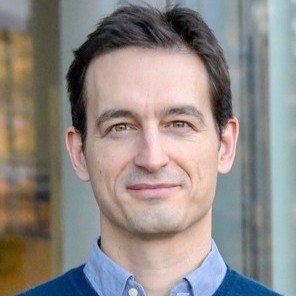
Professor Dr. Marc Toussaint
Technische Universität Berlin
Keynote: Physical Intelligence
The term Physical Intelligence roughly refers to bringing AI into our physical world, e.g. in terms of robots. However, scientifically this means that AI methods -- which are mostly data-driven -- meet fundamental laws and constraints of physics, for which we often have concise models. This raises the interesting question on how our understanding of physics should and can be leveraged for physical AI, or whether AI should learn physics from scratch -- abandoning our scientific understanding. I will discuss challenges in physical intelligence from the perspective of robotics, and approaches to combine data-based and model-based methods.