



Molecular Simulation in the Age of Artificial Intelligence

June
29,
2026  14:00
- 15:00
14:00
- 15:00



Abstract:
Machine learning and deep neural networks boost the efficiency of ab-initio molecular dynamics simulations, making possible first-principles predictions where previously only simplified semiempirical models could be used. Two examples at vastly different physical scales will be employed to illustrate the concept. In the first, we study what is perhaps the most basic chemical reaction in the liquid phase, the recombination of an electron and a proton solvated in water.
In the other, we construct a Landau-Ginzburg model for the ferroelectric phase transition of lead titanate using the electrical polarization and the strain as the macroscopic variables. In both cases, simulations led to predictions that could be compared with experiment and provided new insights into chemical and physical mechanisms.
While the AI tools were instrumental to the success of the models, physics theory and intuition played the most important role.
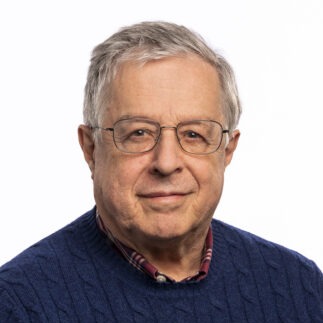
BIO:
Roberto Car was born in Italy and received the doctor degree in physics at the Polytechnic University of Milan. He held professor positions in Italy and Switzerland before joining Princeton University in 1999, where he is currently the Ralph W. Dornte *31 Professor in Chemistry and the Princeton Materials Institute, Professor of Physics and the Program in Applied and Computational Mathematics. Car is a theoretical condensed matter physicist and physical chemist.
He is known for the invention, with Michele Parrinello, of the ab-initio molecular dynamics method, and for other contributions to computational physics that he used in ground-breaking simulation studies of liquids, amorphous solids, nanomaterials, phase transitions, and chemical processes in condensed phase. He has been awarded many prizes, including the 1990 Europhysics Prize, the 1995 American Physical Society Rahman Prize, the 2009 Dirac Medal of the International Centre for Theoretical Physics, the 2012 Fermi Medal of the Italian Physical Society, the 2016 American Chemical Society Theoretical Chemistry Award, and the 2021 Franklin Medal for Chemistry.
He holds honorary degrees from Italian and Swiss Universities and is a member of the National Academy of Sciences of the USA, a fellow of the American Physical Society, the American Association for the Advancement of Science, and the Royal Society of Chemistry (UK).